• 2013 Bugatti Veyron Grand Sport Vitesse

    From Alsace, France. Maximum output 1200 hp @ 6400 rpm and torque 1,500 Nm @ 3000-5000 rpm. Acceleration (0-100 kmh) in 2.6 sec and top speed is 408.84 kmh

  • 2012 Mitsubishi Lancer Evolution X

    From Okayama, Japan. Maximum output 300 hp @ 6500 rpm and torque 422 Nm @ 3500 rpm. Acceleration (0-100 kmh) in 4.5 sec

  • 2013 Audi R8 V10 Plus

    From Neckarsulm, Gerrmany. Maximum output 525 hp @ 8000 rpm and torque 530 Nm @ 6500 rpm. Acceleration (0-100 kmh) in 3.7 sec and top speed is 333 kmh

  • 2012 Aston Martin One-77

    From Warwickshire, United Kingdom. Maximum output 760 hp and torque 750 Nm. Acceleration (-0-100 kmh) in 3.7 sec and top speed is 354 kmh

  • 2013 Volkswagen Passat 1.8 TSI

    From Emden, Germany. Maximum output 160 hp @ 5000-6200 rpm and torque 250 Nm @ 1500-4200 rpm. Acceleration (0-100 kmh) in 8.6 sec and top speed is 220 kmh

  • 2011 Koenigsegg Agera R

    From Ängelholm, Sweden. Maximum output 1139 hp @ 7100 rpm and torque 1200 Nm @ 4100 rpm. Acceleration (0-100 kmh) in 2.8 sec and top speed is 438 kmh

  • 2014 BMW i8

    From Leipzig, Germany. Maximum output 362 hp and torque 570 Nm (combined petrol and hybrid). Mid-range acceleration (80-120 kmh) in 2.6 sec and electronically controlled top speed is 250 kmh

  • 2014 Lamborghini Aventador LP 700-4 Roadster

    From Sant'Agata Bolognese, Italy. Maximum output 700 hp @ 8250 rpm and torque 690Nm @ 5500 rpm. Acceleration (0-100 kmh) in 2.9 sec and top speed is 349 kmh

  • 2015 Ford Mustang GT

    From Flat Rock, Michigan. Maximum output 435 hp and torque 542 Nm

  • 2012 Ferrari F12berlinetta

    From Maranello, Italy. Maximum output 740 hp @ 8250 rpm and torque 690 Nm @ 6000 rpm. Acceleration (0-100kmh) in 3.1 sec and top speed is 362 kmh

Translate

Showing posts with label Volkswagen Derby. Show all posts

Volkswagen Polo Mk3

Volkswagen Polo Mk3 (6N)
Overview
Manufacturer
Volkswagen
Also called
Volkswagen Derby
Production
1994–2002 (Germany)
1996–2009 (Argentina)
Assembly
Wolfsburg, Germany
Pacheco, Argentina
Body and chassis
Class
Supermini
Body style
5-door hatchback
3-door hatchback
4-door saloon
5-door estate
Layout
Front-engine, front-wheel-drive
Platform
Volkswagen Group A03 platform
Related
Audi A2
SEAT Arosa
SEAT Ibiza Mk2
SEAT Córdoba Mk1
Volkswagen Lupo
Powertrain
Engine
1.0 L I4 (petrol)
1.3 L I4 (petrol)
1.4 L I4 8-valve (petrol)
1.4 L I4 16-valve (petrol)
1.6 L I4 8-valve (petrol)
1.6 L I4 16-valve (petrol)
1.4 L I3 TDI (diesel)
1.7 L I4 SDI (diesel)
1.9 L I4 D (diesel)
1.9 L I4 SDI (diesel)
1.9 L I4 TDI (diesel)
Transmission
5-speed manual
4-speed automatic
Dimensions
Wheelbase
2,407 mm (94.8 in) (hatchback)
2,444 mm (96.2 in) (sedan, wagon)
Length
3,715–3,743 mm (146.3–147.4 in) (hb.)
4,138 mm (162.9 in) (sedan, wagon)
Width
1,632–1,655 mm (64.3–65.2 in) (hb.)
1,640 mm (64.6 in) (sedan, wagon)
Chronology
Predecessor
Successor
The Volkswagen Polo Mk3 is the third generation of the Volkswagen Polo supermini car and was produced from 1994 until late 1999 and some models in 2000. It was available in hatchback, sedan and wagon body styles. It shared the same platform and initially a similar design as the contemporary Seat Ibiza (hatchback) and Seat Córdoba (sedan and wagon) models.
The hatchback underwent a major facelift in 2000, while the sedan and the wagon received only minor refinements. It now had a more different exterior and interior design than the also facelifted Seat Ibiza. In 2001, it was discontinued and replaced by its successor, the Volkswagen Polo Mk4, but it continued production in Argentina, where the sedan was facelifted in 2004, receiving the exterior design applied to the facelifted Seat Córdoba and the interior of the facelifted Volkswagen Polo.

Overview

1996 Volkswagen Polo rear view
The third generation Polo (known internally as the Typ 6N) was launched in September 1994, and was a completely new model/chassis from the old Polo, although early versions used the engines from the Mark 2. The Mark 3 was the first Polo to be made available as a five-door as well as three-door hatchback; these were built in 1995-1999.
Interior (pre-facelift)
The platform used for this model used a modified version of the floorpan of the Volkswagen Golf Mark 3, as did the SEAT Ibiza Mk2. A multitude of mechanical parts and all of the suspension components were intechangeable among the three models. Although the dashboard and a number of mechanical components, including engines, were shared with the Ibiza, outwardly the Polo models were entirely different with no body panels shared with the SEAT model.
Initially, only three- and five-door hatchback versions were available. In 1995, four-door saloon ("Polo Classic/Sedan/Derby") and five-door estate ("Polo Wagon/Variant") versions were added to the range — these were badge engineered versions of the SEAT Córdoba (the saloon and estate versions of the Ibiza). They were referred to internally by VW as the Typ 6KV, and shared body panels with the SEAT model rather than the hatchback models.
A convertible version was not produced, although a version with an electrically sliding full length sunroof, called the Polo Open Air, was available.

Engines

Initially the car was available with the 1043cc putting out 45 PS (33 kW; 44 hp), and the 1272cc putting out 55 PS (40 kW; 54 hp) engines from the previous generation Polo, along with a new 1598cc unit. A new 1.4L engine replaced the 1.3L in October 1995. In September 1996 the 1043cc engine was replaced by an all-new aluminium block multi-point injection 999cc developing 50 PS (37 kW; 49 hp). The Classic and Variant models featured a 75 PS (55 kW; 74 hp) or 100 PS (74 kW; 99 hp) 1.6L and a 64 PS (47 kW; 63 hp) 1.9L diesel. For the first time, a turbo-diesel engine (1.9L) was available in a Polo, although only in the 6K models. Due to its smaller engine bay, the standard 3 and 5-door 6N did not get a turbo-diesel engine until the facelift in 2000.

Trim levels

The Polo Mark 3 was much better equipped than its predecessor. A range of models featured items such as colour-coded bumpers, heated/electrically adjustable mirrors, four speaker stereo, pollen filters, central locking, rear head restraints, split rear seats, fog lights, alloy wheels, air bags and so on. The car was available originally in four trim levels ranging from the L at the bottom level of the scale through the CL and GL to the range topping GLX model.
In 1994, the Polo SE or Special Equipment was launched. Based on the 1.4 L it featured a number of features from higher spec models such as the GLX bumpers, Sport Rader alloy wheels, tinted rear light clusters and clear indicators. The Mark 3 came to the end of its production run in 1999 with another Polo Match.
Unlike the Volkswagen Polo Mk1 and Volkswagen Polo Mk2, trim levels were not the same across Europe; the United Kingdom's were L, CL, GL, GLX, 16v (later E, S, SE and GTi); models sold in Europe had trim levels which were individual to the country they were marketed in.

Variants

Sporting variants

Volkswagen Polo GTI 16V at the German Saxony Rally
Sporting variants were not introduced initially, and a supercharged G40 version of the Mark 4 was never made, but a GTI model introduced in 1995 catered for the hot hatch market. With a limited production run of 3000 units, the 6N GTI was available only in continental Europe. Featuring a 1.6 16V 125 PS (92 kW) version of the unit that would later be found in the Mark 3F model, the car came with 15" BBS alloys and could sprint to 100 km/h (62 mph) in just 9.1 seconds. The 16V, introduced to replace the GLX, was one of the most popular Mark 3 versions with modifiers, it used a 1.4 16V unit pushed to 100 PS (74 kW) as standard. This car was not a pure sporting model, and with a 0–100 km/h time of 10.6 seconds and a 190 km/h (118 mph) top speed, it was not as fast as the sporting Ibiza model (which used a 2.0 L 16V engine). The Polo GTI was often seen as over priced for the performance it delivered.

Polo GTI

2000 Volkswagen Polo GTI interior
Between 2000 and 2002 VW offered two sporting models, the 16V and GTI. The 16V came with the 1.4 16V 100 PS (74 kW) engine and had options such as 15" Spa alloys and air conditioning. However more interest was in the GTI. Available only in hatchback form, the GTI was powered by a 1.6 16V 125 PS (92 kW) engine with variable valve timing, making it the most powerful Polo to come out the factory to date. External changes gave the car the looks to match its power. Deeper front bumpers with honeycomb mesh inserts, side skirts, fog lights, a honeycomb mesh grill and 15" BBS split rims suited the car well. There were also standard extras such as Climatronic fully automatic air conditioning, Xenon headlights (with a headlight washer system), a 6 disc CD autochanger, exclusive sports interior with leather steering wheel and gearstick, chrome inserts and driver aids such as ABS with EBD and an EDL (a system to aid traction). Leather and satellite navigation were also optional extras. The Mark 3F Polo GTI however missed the new six-speed gearbox that was introduced in the smaller Lupo GTI.

Polo Harlequin

Multicoloured Polo Harlequin
Volkswagen Polo Harlequin
In Europe, a special "Harlekin" or "Harlequin" model was released in 1995. The Polo Harlekin was an unusual edition featuring a multi-coloured body with each panel in a different colour: Flash red, Ginster yellow, Pistachio green and Chagall blue. It used the same engines as normal Polos—only the colour of the panels was the difference. Originally limited to 1,000, around 3,800 of this series were produced. There were 2500 Polo Harlequins made in the UK between 1996 to 1998.

Facelift

The Polo was facelifted in 2000 (internal designation Typ 6N2, unofficially known as the Mark 3F), with the hatchback models featuring updated styling including new headlights and bumpers and an all new interior based on that of the Lupo. Although the car was similar in appearance to the Mark 3 (the bodyshell was fully galvanised and stiffened but not fully redesigned, although some panels were changed), Volkswagen claimed that 70% of the components were new. Power steering, antilock brakes and twin airbags were made standard. The saloon and estate versions received the new interior, but not the full exterior facelift. Also, the three-cylinder 1.4-litre TDI engine was introduced for the three and five-door hatchbacks.
Specification options ranged from power steering, tinted glass, split rear seats, electric windows and cup holders to ABS, air conditioning, Xenon headlights and satellite navigation. Thirty-two models with seven engines ranging from the 1.4 diesel to the 1.6 L 16V GTI made the choice of Polo the widest ever seen. The base model was the Comfortline with the option of no less than 5 engines ranging from the 1.0 50 PS (37 kW) to the 1.9 TDI unit found across the VW range, producing 90 PS (66 kW). The 1.0 L hatchback was considered cheap for the build quality and spec list when compared to other cars. Then came the Trendline and Highline models. With engine options ranging from 60 PS (44 kW) to a 110 PS (81 kW) diesel they offered a range of features usually found on the more sporty models but without the insurance or running cost woes.

Awards

  • 1999 Used Car Buyer Greatest Used Car Buy Awards Best Economy Car
  • 1998 Top Gear Magazine Top Cars - Best Supermini
  • 1997 Which? Magazine Best Buys - Best Supermini
  • 1997 Auto Express New Car Honours - Best Supermini
  • 1997 Complete Car of the Year Awards - Best Supermini
  • 1996 Semperit Irish Car of the Year
  • 1995 What Car? - Car of the Year

Outside Europe

Asia

Argentine facelifted Polo Classic
In some Asia Pacific markets, the Polo Classic (1995-2002MY) was sold as the Derby.
In China, FAW-Volkswagen simply rebadged the SEAT Cordoba without the exterior modifications of the European Derby (i.e. rear and front bumpers/headlights). It was sold & assembled as the FAW-VW City-Golf during 1996. It is not to be confused with the Canadian Mark 4 City Golf released in 2006 in Canada.

Latin America

In Argentina, Volkswagen produced the Polo Classic, which was sold as the Derby in Mexico, and the Volkswagen Caddy, a SEAT Inca-derived van, which shares the same platform and front end styling as the Polo Classic. The Polo Classic (Typ 6K) and the Caddy (Typ 9K) have been produced since 2000. All the facelifted models are Argentine-built models.
Latin America had its own trim levels, although some of the trim level names were similar to their European counterparts. The CL and GL were available from 1996 onwards in Brazil; these were similar to their European counterparts, although slightly more expensive due to import tariffs.

Related models

  • The SEAT Ibiza Mark 2 was based on the same platform as the Mark 3 Polo, as were the SEAT Inca and Volkswagen Caddy panel vans.
  • The South African built Volkswagen Polo Playa was a rebadged version of the SEAT Ibiza Mark 2, and was sold instead of the European Polo in South Africa until the introduction of the Polo Mark 4.
  • The Volkswagen Lupo and SEAT Arosa city cars were based on a shortened version of the 6N platform, and shared many components.

Back to Volkswagen Polo

Back to Volkswagen
Last updated on 24 March 2015 at 14:44.


Click link below to check the


Accessories and Parts in UK

Accessories and Parts in Germany
Accessories and Parts in United States
Accessories and Parts in Netherlands
Accessories and Parts in Italy
Accessories and Parts in Spain

Read More »

Volkswagen Polo Mk2

Volkswagen Polo Mk2
Volkswagen Polo Mk2
Overview
Also called
Volkswagen Derby
Production
1981–1994
Body and chassis
Class
Supermini
Body style
3-door hatchback
3-door hatchback (coupé)
2-door sedan
Platform
Volkswagen Group A02
Chronology
Predecessor
Polo Mk1
Successor

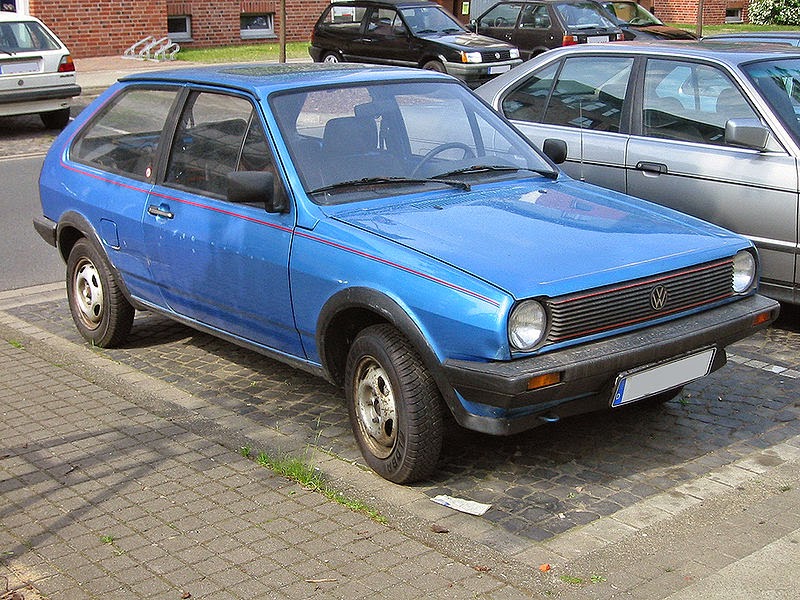
The Volkswagen Polo Mk2 is the second generation of the Volkswagen Polo supermini, it was produced from late 1981 until 1994. It received a major facelift in 1990 and was available in three different bodystyles, including a controversial "kammback"-styled hatchback.

Polo Mark 2

Volkswagen Polo Mk2
Volkswagen Polo Mk2
Overview
Also called
Volkswagen Derby (sedan version only)
Production
1981–1990
Assembly
Wolfsburg, Germany
Pamplona, Spain
Body and chassis
Class
Supermini
Body style
3-door hatchback
3-door hatchback (coupé)
2-door sedan
Platform
Volkswagen Group A02
Chronology
Predecessor
Polo Mk1
Successor
Polo Mk2F
A revised Polo model (known as the Mark 2 or Mark II, internally designated Typ 86C) was introduced in October 1981, with the major change being the introduction of a new body style with a steep (almost vertical) rear window, as well a version with a diagonal rear window and a similar profile to the previous model. These two body styles were called the Hatchback and Coupé respectively, although in fact both were three-door hatchbacks. The latter was added to the range in 1983 as the radical styling of the original design was not welcomed by all. The Coupé was originally only available with the more powerful engines (55 and 75 PS), but after a mild facelift in August 1984 the base 40 PS (29 kW) unit was also made available.
The sedan version was no longer called the Derby in all countries, and was changed to the Polo Classic. Production was expanded to Spain in the mid-1980s following Volkswagen's takeover of SEAT.
1093 cc or 1272 cc engines were available at launch. In 1986, the Polo received numerous technical improvements; amongst many other minor updates, the engines were changed to lower maintenance hydraulic tappets, new camshafts and valve gear and an automatic choke; the 1043 cc engine replaced the 1093 cc, and in some markets the 1.3 litre engine was available with fuel injection and equipped with a catalytic converter. In 1984 an all-new 1.3 litre engine was introduced, which was used in various generations of Polo until 1996. The Polo received some changes in August 1984, including a new dashboard, a bigger fuel tank, and more standard equipment. The GL was discontinued with the CL essentially taking its place. All models now received round rather than the earlier square headlights.
Available with the 1093 cc engine the Coupé featured additions such as sporting seats trim, wheel arch extensions, rear spoiler, low profile tyres and a rev counter, as well as the round headlights which were later fitted across the range. The GL featured a 60 PS (44 kW) engine. In 1985, the first sporty Polo, the Coupé GT, was introduced with a 75 PS (55 kW) engine, as well as servo assisted brakes, twin headlights, a digital clock, sports seats and a rev counter. Other special feature models were introduced over the rest of the period of the Mark 2 production run including models such as the Twist, Parade and Country.
Mk2 Derby saloon (1981-1984)
The Mark 2 Polo was used extensively by Volkswagen to develop future innovations, for example supercharging. The supercharger-equipped GT G40 version was introduced in 1987, in LHD Coupe form only, first as a limited batch of about 500 cars, most of which were sold to VW workers (as a homologated version of the car for the G40 Cup race series) and later as a normal production version. This model featured the 1272 cc engine with a small bore G-Lader supercharger, giving 113 PS (83 kW) at 6000 rpm, as well as modified suspension and the bodywork of the "normal" GT Coupé. The car could reach 100 kilometres per hour (62 mph) in 8.1 secs from and had maximum speed of 196 kilometres per hour (122 mph) it was used by VW to set a number of world endurance speed records — such as the 1300 cc class records for speed over 24 hours and speed over a distance of 5000 km. A G-Lader would later be used on the larger and more technically challenging G60 engine used in the Golf and Corrado.
An extremely fuel-efficient two-cylinder diesel was prototyped in the mid-1980s with a G40 supercharger to overcome its small capacity, although this did not make production. A high-fuel-efficiency model which did make production was Formel E (E for Economy), introduced in 1983. This used a high-compression 1272 cc engine, longer gear ratios and an early-stop-start ignition system (called SSA) that would cut the engine when idle for more than two seconds to save fuel whilst temporarily stopped in traffic, and restart the engine when the gear lever was moved to the left in neutral. The system could be enabled or disabled by means of a toggle switch below the light switch. Similar systems were later used on the Volkswagen Golf Mk3. Similar systems were developed by other car manufacturers.

Engines

The Mark 2 was available with the following engines:
  • 1.1 1093 cc 4-cylinder petrol engine (1981–1983)
  • 1.3 1272 cc 4-cylinder petrol engine. (1981–)
  • 1.0 1043 cc 4-cylinder petrol engine (1983–)
  • 1.3 1272 cc 4-cylinder petrol engine with fuel injection and equipped with a catalytic converter. (1991–)
  • 1.3 1272 cc 4-cylinder supercharged petrol engine with 133 PS (GT G40 version 1987 only)
  • 1.3 L 4-cylinder diesel engine (1986–1990)
  • 1.4 L 4-cylinder diesel engine (1990–)

Trim levels

The VW Polo was available in five trim levels;
  • Fox (1.0, 1.3 petrol, 1.3 diesel), from August 1984
  • C (1.0, 1.1 petrol, 1.3 diesel)
  • CL (1.0, 1.1, 1.3 petrol, 1.3 diesel)
  • GL (1.1, 1.3 petrol, 1.3 diesel)
  • GT (1.3 petrol)
For the 1985 model year, the GL was dropped and the bargain limited edition "Fox" model was introduced in some markets. In the UK, the spartanly equipped Fox arrived in 1987, available only with a 1.0-litre engine. It was also sold with the 1.3 and as a diesel version in Europe. However, neither the 1.3 petrol nor the diesel engines were available in the UK. Otherwise, versions sold on the Continent were similar to their UK counterparts; this was the same for all Polo Mark 2 versions up to the 1994 redesign.

Polo Mark 2 facelift (1990-1994)

1992 Volkswagen Polo Coupé
Volkswagen Polo Mk2F (86C)
Overview
Also called
Volkswagen Derby
Production
1990–1994
Body and chassis
Class
Supermini
Body style
3-door hatchback
3-door hatchback (coupé)
2-door sedan
Platform
Volkswagen Group A02
Chronology
Successor
1994 Mk2F Polo hatchback (UK-Spec)
A facelift in 1990 (referred to unofficially as the Mark 2F or IIF) saw square headlights, bigger bumpers and a new interior (dash and door trim). The three different styles (hatchback, coupé hatchback and sedan) were maintained. As well as the cosmetic differences, under the skin the car received modifications to the chassis and suspension as well as the addition of servo-assisted brakes to all models including right hand drive versions. The new Polo still had the 4-cylinder engine but now as well as the carburetor 1.0 L, a fuel injection model was available with single-point injection and all engines came standard with a catalytic converter to combat tightening EU laws on automobile emissions.
The Derby was only produced in Spain, and ceased production in 1992. At this point, the Polo was now terminally dated. The follow-up model, the Mark 3 or Typ 6N version, was already well developed, but due to the high sales numbers, production of the other Polo models (hatchback and Coupé) was continued to 1994 in Wolfsburg and Spain. Volkswagen used the extra two years to restudy the Typ 6N and change the format slightly before introduction in 1994.
Soon after the launch of the Mark 2F, another sporting model was added to the range — a new version of the supercharged G40, now as a full production model in all markets rather than the limited batch of Mark 2 G40s. The engine used a slightly different version of the digifant injection system to allow the use of a catalytic converter, and produced 113 PS (83 kW), which gave 0–100 km/h figures of 8.6 seconds and a top speed of 196 kilometres per hour (122 mph). The car was lowered by 25 mm (1.0 in) over the standard Polo and featuring special edition Le Mans sports seats, similar exterior styling to the GT with the addition of a bee sting aerial and 5.5J X 13" BBS RA cross spoke alloy wheels. As with the previous model, VW Motorsport modified G40 Cup cars were sold for racing in a one-make series, the Volkswagen Polo G40 Cup. The reliability of these vehicles was hampered by early production mistakes and high maintenance costs — parts of the G-Lader can wear out quickly if unmaintained — which damaged the reputation of the supercharging concept. Volkswagen ended its experimentation with supercharged hot hatches at the end of the Polo 2F production run, due to high manufacturing costs and less than enthusiastic sales. The price was little less than that of the basic Golf GTI.
In 1992 VW released a limited number of special edition Polos, with special trim and a G40 engine and suspension. The "Genesis" G40 was made to special order only. A single right hand drive example found its way to the UK. This one-off model was a competition prize when the VW-sponsored Genesis tour reached its UK leg.

Trim levels

Trim levels were Fox, CL, GL, Boulevard and Genesis. The Fox was the entry-level model, only available with a 1.0-litre engine, but in Europe it had a 1.3-litre version.


Back to Volkswagen Polo
Back to Volkswagen
Last updated on 19 January 2015 at 21:38.


CLICK link below to check the

Accessories and Parts in UK

Accessories and Parts in Germany
Accessories and Parts in United States
Accessories and Parts in Netherlands
Accessories and Parts in Italy
Accessories and Parts in Spain

Read More »
Back to Top