


Renault S.A. (French pronunciation: [ʁəno], re-noh) is a French multinational vehicle manufacturer established in 1899. The company produces a range of cars and vans, and in the past, trucks, tractors, tanks, buses/coaches and autorail vehicles. In 2011, Renault was the third biggest European automaker by production behind Volkswagen Group and PSA and the ninth biggest automaker by production in the world.
Headquartered in Boulogne-Billancourt, Renault owns the Romanian manufacturer Automobile Dacia and the Korean Renault Samsung Motors. Renault also owns subsidiaries RCI Banque (providing automotive financing), Renault Retail Group (automotive distribution) and Motrio (automotive parts). Renault Trucks, previously Renault Vehicules Industriels, has been part of Volvo Trucks since 2001. Renault Agriculture became 100% owned by German agricultural equipment manufacturer CLAAS in 2008. Carlos Ghosn is the current chairman and CEO and the French government owns a 15 percent share of Renault.
As part of the Renault-Nissan Alliance, the company is the fourth-largest automotive group. Together Renault and Nissan are undertaking significant electric car development, investing €4 billion (US$5.16 billion) in eight electric vehicles over three to four years from 2011.
The company's core market is Europe. The company is known for its role in motor sport, and its success over the years in rallying and Formula 1.
Headquartered in Boulogne-Billancourt, Renault owns the Romanian manufacturer Automobile Dacia and the Korean Renault Samsung Motors. Renault also owns subsidiaries RCI Banque (providing automotive financing), Renault Retail Group (automotive distribution) and Motrio (automotive parts). Renault Trucks, previously Renault Vehicules Industriels, has been part of Volvo Trucks since 2001. Renault Agriculture became 100% owned by German agricultural equipment manufacturer CLAAS in 2008. Carlos Ghosn is the current chairman and CEO and the French government owns a 15 percent share of Renault.
As part of the Renault-Nissan Alliance, the company is the fourth-largest automotive group. Together Renault and Nissan are undertaking significant electric car development, investing €4 billion (US$5.16 billion) in eight electric vehicles over three to four years from 2011.
The company's core market is Europe. The company is known for its role in motor sport, and its success over the years in rallying and Formula 1.
Founded
|
25 February 1899
|
Founder(s)
|
Louis Renault, Marcel Renault, Fernand Renault
|
Headquarters
|
Boulogne-Billancourt, France
|
Area served
|
Worldwide (118 countries)
|
Key People
|
Carlos Ghosn (Chairman and CEO)
|
Subsidiaries
|
Transportation
Automobile Dacia (99.43%)
Renault Samsung Motors (80.1%)
Nissan (43.4%)
AutoVAZ (25%)
Renault Sport
Renault Sport F1
Avtoframos
Oyak-Renault
Retail
Renault Retail Group
Other
RCI Banque
Motrio
International
Renault Argentina
Renault Spain
Renault do Brasil
Renault India Private Limited
Renault Mexico
Renault Slovenia
Renault Colombia
Renault Morocco
|
Website
|
History
Foundation and early years (1898-1918)
 |
| Louis Renault in 1903 |
The Renault corporation was founded in 1899 as Société Renault Frères by Louis Renault and his brothers Marcel and Fernand. Louis was a bright, aspiring young engineer who had already designed and built several models before teaming up with his brothers, who had honed their business skills working for their father's textiles firm. While Louis handled design and production, Marcel and Fernand handled company management.
The first Renault car, the Renault Voiturette 1CV was sold to a friend of Louis' father after giving him a test ride on 24 December 1898. The client was so impressed with the way the tiny car ran and how it climbed the streets that he bought it.
In 1903 Renault began to manufacture its own engines inasmuch as until then it had been purchasing them to De Dion-Bouton. The first major sale was in 1905 to the Société des Automobiles de Place, which bought Renault AG1 cars to establish a fleet of taxis. These vehicles would eventually be used by the French military for transporting troops during World War I which earned them be known as "Taxi de la Marne." By 1907, a significant percentage of the taxis circulating in London and Paris had been built by Renault. In 1908 the company produced 3,575 units, becoming the largest car manufacturer of France.
The brothers recognised the publicity that could be obtained for their vehicles by participation in motor racing and Renault made itself known through achieving instant success in the first city-to-city races held in Switzerland resulting in rapid expansion for the company. Both Louis and Marcel Renault raced company vehicles, but Marcel was killed in an accident during the 1903 Paris-Madrid race. Although Louis Renault never raced again, his company remained very involved, including Ferenc Szisz winning the first Grand Prix motor racing event in a Renault AK 90CV in 1906. Louis was to take full control of the company as the only remaining brother in 1906 when Fernand retired for health reasons. Fernand died in 1909 and Louis became the sole owner, renaming the companySociété des Automobiles Renault (Renault Automobile Company).
The Renault reputation for innovation was fostered from very early on. At the time, cars were very much luxury items, and the price of the smallest Renaults available being 3000 francs reflected this; an amount it would take ten years for the average worker at the time to earn. In 1905 the company introduced mass-production techniques, and Taylorism in 1913. As well as cars and taxis, Renault manufactured buses and commercial cargo vehicles in the pre-war years. The first real commercial truck from the company was introduced in 1906. During World War I, it branched out into ammunition, military airplanes and vehicles such as the revolutionary Renault FT tank. The company's military designs were so successful that Renault himself was awarded the Legion of Honour for his company's contributions to the war. The company also exported their engines overseas to American auto manufacturers for use in such automobiles as the GJG which used a Renault 26 hp or 40 hp four-cylinder engine.
The first Renault car, the Renault Voiturette 1CV was sold to a friend of Louis' father after giving him a test ride on 24 December 1898. The client was so impressed with the way the tiny car ran and how it climbed the streets that he bought it.
In 1903 Renault began to manufacture its own engines inasmuch as until then it had been purchasing them to De Dion-Bouton. The first major sale was in 1905 to the Société des Automobiles de Place, which bought Renault AG1 cars to establish a fleet of taxis. These vehicles would eventually be used by the French military for transporting troops during World War I which earned them be known as "Taxi de la Marne." By 1907, a significant percentage of the taxis circulating in London and Paris had been built by Renault. In 1908 the company produced 3,575 units, becoming the largest car manufacturer of France.
The brothers recognised the publicity that could be obtained for their vehicles by participation in motor racing and Renault made itself known through achieving instant success in the first city-to-city races held in Switzerland resulting in rapid expansion for the company. Both Louis and Marcel Renault raced company vehicles, but Marcel was killed in an accident during the 1903 Paris-Madrid race. Although Louis Renault never raced again, his company remained very involved, including Ferenc Szisz winning the first Grand Prix motor racing event in a Renault AK 90CV in 1906. Louis was to take full control of the company as the only remaining brother in 1906 when Fernand retired for health reasons. Fernand died in 1909 and Louis became the sole owner, renaming the companySociété des Automobiles Renault (Renault Automobile Company).
The Renault reputation for innovation was fostered from very early on. At the time, cars were very much luxury items, and the price of the smallest Renaults available being 3000 francs reflected this; an amount it would take ten years for the average worker at the time to earn. In 1905 the company introduced mass-production techniques, and Taylorism in 1913. As well as cars and taxis, Renault manufactured buses and commercial cargo vehicles in the pre-war years. The first real commercial truck from the company was introduced in 1906. During World War I, it branched out into ammunition, military airplanes and vehicles such as the revolutionary Renault FT tank. The company's military designs were so successful that Renault himself was awarded the Legion of Honour for his company's contributions to the war. The company also exported their engines overseas to American auto manufacturers for use in such automobiles as the GJG which used a Renault 26 hp or 40 hp four-cylinder engine.
Between the world wars (1919-1938)
Louis Renault enlarged the scope of his company after 1918, producing agricultural and industrial machinery. A number of the new products emerged from war developments. The first Renault's tractor, the Type GP produced between 1919 and 1930, was based on the FT tank. However, Renault struggled to compete with the increasingly popular small, affordable "people's cars", while problems with the stock market and the workforce also adversely affected the company's growth. Renault also had to find a way to distribute its vehicles more efficiently. In 1920, he signed one of its first distribution contracts with Gustave Gueudet, an entrepreneur from northern France.
The pre-First World War cars had a distinctive front shape caused by positioning the radiator behind the engine to give a so-called "coalscuttle" bonnet. This continued through the 1920s and it was not until 1930 that all models had the radiator at the front. The bonnet badge changed from circular to the familiar and continuing diamond shape in 1925. Renault models were introduced at the Paris Motor Show which was held in September or October of the year. This has led to a slight confusion as to vehicle identification. For example a "1927" model was mostly produced in 1928.
Renault produced a range of cars from small to very large. For example in 1928, when Renault produced 45,809 cars, the range of seven models started with a 6cv, a 10cv, the Monasix, 15cv, the Vivasix, the 18/22cv and the 40cv. There was a range of factory bodies, of up to eight styles, and the larger chassis were available to coachbuilders. The number of a model produced varied with size. The smaller were the most popular with the least produced being the 18/24cv. The most expensive factory body style in each range was the closed car. Roadsters and tourers (torpedoes) were the cheapest.
The London operation was very important to Renault in 1928. The UK market was quite large and from there "colonial" modified vehicles were dispatched. Lifted suspensions, enhanced cooling and special bodies were common on vehicles sold to the colonies. Exports to the USA by 1928 had almost reduced to zero from their high point prior to WW1 when to ship back a Grand Renault or similar high class European manufactured car was common. A NM 40cv Tourer had a USA list price of over $4,600 being about the same as a Cadillac V-12. Closed 7-seat limousines started at $6,000 which was more expensive than a Cadillac V-16.
The whole range was conservatively engineered and built. The newly introduced 1927 Vivasix, model PG1, was sold as the "executive sports" model. Lighter weight factory steel bodies powered by a 3180 cc six-cylinder motor provided a formula that went through to the Second World War.
The "de Grand Luxe Renaults", that is any with over 12-foot (3.7 m) wheelbase, were produced in very small numbers in two major types – six- and eight-cylinder. The 1927 six-cylinder Grand Renault models NM, PI and PZ introduced the new three spring rear suspension that considerably aided road holding that was needed as with some body styles over 90 mph (140 km/h) was possible. The 8-cylinder Reinastella was introduced in 1929. This model led on to a range culminating in the 1939 Suprastella. Coachbuilders included Kellner, Labourdette, J.Rothschild et Fils and Renault bodies. Closed car Renault bodies were often trimmed and interior wood work completed by Rothschild.
Renault also introduced in 1928 an upgraded specification to the larger cars designated "Stella". The Vivastella's and Grand Renaults had upgraded interior fittings and had a small star fitted above the front hood Renault diamond. This proved to be a winning marketing differentiator and in the 1930s all cars changed to the Stella suffix from the previous two alpha character model identifiers.
The Grand Renaults were built using a considerable amount of aluminium. Engines, brakes, transmissions, floor and running boards and all external body panels were aluminium. Of the few that were built, many went to scrap to aid the war effort.
In 1931, Renault introduced diesel engines for its commercial vehicles.
The pre-First World War cars had a distinctive front shape caused by positioning the radiator behind the engine to give a so-called "coalscuttle" bonnet. This continued through the 1920s and it was not until 1930 that all models had the radiator at the front. The bonnet badge changed from circular to the familiar and continuing diamond shape in 1925. Renault models were introduced at the Paris Motor Show which was held in September or October of the year. This has led to a slight confusion as to vehicle identification. For example a "1927" model was mostly produced in 1928.
Renault produced a range of cars from small to very large. For example in 1928, when Renault produced 45,809 cars, the range of seven models started with a 6cv, a 10cv, the Monasix, 15cv, the Vivasix, the 18/22cv and the 40cv. There was a range of factory bodies, of up to eight styles, and the larger chassis were available to coachbuilders. The number of a model produced varied with size. The smaller were the most popular with the least produced being the 18/24cv. The most expensive factory body style in each range was the closed car. Roadsters and tourers (torpedoes) were the cheapest.
The London operation was very important to Renault in 1928. The UK market was quite large and from there "colonial" modified vehicles were dispatched. Lifted suspensions, enhanced cooling and special bodies were common on vehicles sold to the colonies. Exports to the USA by 1928 had almost reduced to zero from their high point prior to WW1 when to ship back a Grand Renault or similar high class European manufactured car was common. A NM 40cv Tourer had a USA list price of over $4,600 being about the same as a Cadillac V-12. Closed 7-seat limousines started at $6,000 which was more expensive than a Cadillac V-16.
The whole range was conservatively engineered and built. The newly introduced 1927 Vivasix, model PG1, was sold as the "executive sports" model. Lighter weight factory steel bodies powered by a 3180 cc six-cylinder motor provided a formula that went through to the Second World War.
The "de Grand Luxe Renaults", that is any with over 12-foot (3.7 m) wheelbase, were produced in very small numbers in two major types – six- and eight-cylinder. The 1927 six-cylinder Grand Renault models NM, PI and PZ introduced the new three spring rear suspension that considerably aided road holding that was needed as with some body styles over 90 mph (140 km/h) was possible. The 8-cylinder Reinastella was introduced in 1929. This model led on to a range culminating in the 1939 Suprastella. Coachbuilders included Kellner, Labourdette, J.Rothschild et Fils and Renault bodies. Closed car Renault bodies were often trimmed and interior wood work completed by Rothschild.
Renault also introduced in 1928 an upgraded specification to the larger cars designated "Stella". The Vivastella's and Grand Renaults had upgraded interior fittings and had a small star fitted above the front hood Renault diamond. This proved to be a winning marketing differentiator and in the 1930s all cars changed to the Stella suffix from the previous two alpha character model identifiers.
The Grand Renaults were built using a considerable amount of aluminium. Engines, brakes, transmissions, floor and running boards and all external body panels were aluminium. Of the few that were built, many went to scrap to aid the war effort.
In 1931, Renault introduced diesel engines for its commercial vehicles.
World War II and aftermath (1939 - 1944)
 |
| Renault Frégate |
 |
| Renault 4CV |
A few weeks after the Liberation of Paris, at the start of September 1944, the factory gates at Renault’s Billancourt plant reopened. Operations restarted only very slowly, in an atmosphere poisoned by plotting and political conspiracy, undertaken in the name of popular justice. Back in 1936 the Billancourt factory had been at the heart of violent political and industrial unrest that had surfaced in France under Leon Blum’s Popular Front government: although the political jostling and violence that followed the liberation was ostensibly a backlash from the rivalries between capitalist collaboration and communist resistance, many of the scores being settled actually predated the German invasion. Responding to the chaotic situation at Renault, on 27 September 1944 a meeting of the Council of (the provisional government's) Ministers took place under de Gaulle’s presidency. Postwar European politics had quickly become polarised between communists and anti-communists, and in France De Gaulle was keen to resist Communist Party attempts to monopolise the political dividends available to resistance heroes: politically Billancourt was a communist stronghold. The government decided to "requisition" the Renault factories. A week later, on 4 October Pierre Lefaucheux, a resistance leader with a background in engineering and top-level management, was appointed provisional administrator of the firm, assuming his responsibilities at once.
Meanwhile the provisional government accused Louis Renault of collaborating with the Germans. In the frenzied atmosphere of those early post-liberation days, with many wild accusations against him, but believing himself innocent of the crimes of collaboration, Renault was advised by his lawyers not to flee the country, but to present himself to a judge. He presented himself to Judge Marcel Martin, on 22 September 1944. Louis Renault was arrested on 23 September 1944, like several other French auto-industry leaders at the time. He was incarcerated at Fresnes prisonwhere he died on 24 October 1944 under unclear circumstances, while awaiting trial.
On 1 January 1945, by decree of General Charles de Gaulle based on the untried accusations of collaboration, the company was expropriated from Louis Renault posthumously and on 16 January 1945 it was formally nationalised as Régie Nationale des Usines Renault. Renault's were the only factories permanently expropriated by the French government.
Meanwhile the provisional government accused Louis Renault of collaborating with the Germans. In the frenzied atmosphere of those early post-liberation days, with many wild accusations against him, but believing himself innocent of the crimes of collaboration, Renault was advised by his lawyers not to flee the country, but to present himself to a judge. He presented himself to Judge Marcel Martin, on 22 September 1944. Louis Renault was arrested on 23 September 1944, like several other French auto-industry leaders at the time. He was incarcerated at Fresnes prisonwhere he died on 24 October 1944 under unclear circumstances, while awaiting trial.
On 1 January 1945, by decree of General Charles de Gaulle based on the untried accusations of collaboration, the company was expropriated from Louis Renault posthumously and on 16 January 1945 it was formally nationalised as Régie Nationale des Usines Renault. Renault's were the only factories permanently expropriated by the French government.
Postwar resurgence (1945–71)
Under the leadership of Pierre Lefaucheux, Renault experienced both a commercial resurgence as well as labor unrest – that was ultimately to continue into the 1980s.
In secrecy during the war, Louis Renault had developed the rear engine 4CV which was subsequently launched under Lefacheux in 1946. Renault debuted its flagship model, the largely conventional 2-litre 4-cylinder Renault Frégate (1951–1960), shortly thereafter. The 4CV proved itself a capable rival for cars such as the Morris Minor and Volkswagen Beetle; its sales of more than half a million ensured its production until 1961.
After the success of the 4CV, Lefacheux continued to defy the postwar French Ministry of Industrial Production, which had wanted to convert Renault solely to truck manufacture, by directing the development of its successor. He oversaw the prototyping of the Dauphine (until his death) – enlisting the help of artist Paule Marrot in pioneering the company's textile and color division.
The Dauphine sold extremely well as the company expanded production and sales further abroad, including Africa and North America. The Dauphine sold well initially in the US, where it subsequently became outdated against increased competition, including from the country's nascent domestic compacts such as the Chevrolet Corvair.
Renault subsequently launched two cars which became very successful – the Renault 4 (1961–1992), a practical competitor for the likes of the Citroën 2CV, and Renault 8. The larger rear-engined Renault 10 followed the success of the R8, and was the last of the rear-engined Renaults. The company achieved success with the more modern and more upmarket Renault 16, a pioneering hatchback launched in 1966, followed by the smaller Renault 6.
During the 1950s, Renault absorbed small French heavy vehicles' manufacturers (Somua and Latil) and in 1955 merged them with its own truck and bus division to form the Société Anonyme de Véhicules Industriels et d'Equipements Mécaniques (Saviem).
In secrecy during the war, Louis Renault had developed the rear engine 4CV which was subsequently launched under Lefacheux in 1946. Renault debuted its flagship model, the largely conventional 2-litre 4-cylinder Renault Frégate (1951–1960), shortly thereafter. The 4CV proved itself a capable rival for cars such as the Morris Minor and Volkswagen Beetle; its sales of more than half a million ensured its production until 1961.
After the success of the 4CV, Lefacheux continued to defy the postwar French Ministry of Industrial Production, which had wanted to convert Renault solely to truck manufacture, by directing the development of its successor. He oversaw the prototyping of the Dauphine (until his death) – enlisting the help of artist Paule Marrot in pioneering the company's textile and color division.
The Dauphine sold extremely well as the company expanded production and sales further abroad, including Africa and North America. The Dauphine sold well initially in the US, where it subsequently became outdated against increased competition, including from the country's nascent domestic compacts such as the Chevrolet Corvair.
Renault subsequently launched two cars which became very successful – the Renault 4 (1961–1992), a practical competitor for the likes of the Citroën 2CV, and Renault 8. The larger rear-engined Renault 10 followed the success of the R8, and was the last of the rear-engined Renaults. The company achieved success with the more modern and more upmarket Renault 16, a pioneering hatchback launched in 1966, followed by the smaller Renault 6.
During the 1950s, Renault absorbed small French heavy vehicles' manufacturers (Somua and Latil) and in 1955 merged them with its own truck and bus division to form the Société Anonyme de Véhicules Industriels et d'Equipements Mécaniques (Saviem).
Modern era (1972–1980)
The company's compact and economical Renault 5 model, launched in 1972, was another success, particularly in the wake of the 1973 energy crisis. Soon after, the four-door Renault 12 model slotted into the Renault range between the Renault 6 and Renault 16, and introduced a new styling theme. Throughout the 1970s the R4, R5, R6, R12, R15, R16 and R17 maintained Renault's production with further new models launched including the Renault 18 and Renault 20.
Endangered like all of the motor industry by the energy crisis, during the mid seventies the already expansive company diversified further into other industries and continued to expand globally, including into South East Asia. The energy crisis also provoked Renault's attempt to reconquer the North American market; despite the Dauphine's success in the United States in the late 1950s, and an unsuccessful car-assembly project in Saint-Bruno-de-Montarville, Quebec, (1964–72), Renault as a stand-alone brand, began to disappear from North America at the end of the '70s.
Throughout the decades Renault developed a collaborative partnership with Nash Motors Rambler and its successor American Motors Corporation (AMC). From 1962 to 1967, Renault assembled complete knock down (CKD) kits of the Rambler Classic sedans in its factory in Belgium. Renault did not have large or luxury cars in its product line and the "Rambler Renault" would be aimed as an alternative to the Mercedes-Benz "Fintail" cars. Later, Renault would continue to make and sell a hybrid of AMC's Rambler American and Rambler Classic called the Renault Torino in Argentina (sold through IKA-Renault). Renault partnered with AMC on other projects, such as development of a rotary concept engine in the late 60s.
Endangered like all of the motor industry by the energy crisis, during the mid seventies the already expansive company diversified further into other industries and continued to expand globally, including into South East Asia. The energy crisis also provoked Renault's attempt to reconquer the North American market; despite the Dauphine's success in the United States in the late 1950s, and an unsuccessful car-assembly project in Saint-Bruno-de-Montarville, Quebec, (1964–72), Renault as a stand-alone brand, began to disappear from North America at the end of the '70s.
Throughout the decades Renault developed a collaborative partnership with Nash Motors Rambler and its successor American Motors Corporation (AMC). From 1962 to 1967, Renault assembled complete knock down (CKD) kits of the Rambler Classic sedans in its factory in Belgium. Renault did not have large or luxury cars in its product line and the "Rambler Renault" would be aimed as an alternative to the Mercedes-Benz "Fintail" cars. Later, Renault would continue to make and sell a hybrid of AMC's Rambler American and Rambler Classic called the Renault Torino in Argentina (sold through IKA-Renault). Renault partnered with AMC on other projects, such as development of a rotary concept engine in the late 60s.
 |
| Renault 5 Turbo |
This was one of a series of collaborative ventures undertaken by Renault in the late 1960s and 1970s, as the company established subsidiaries in Eastern Europe, most notably Dacia in Romania, and South America (many of which remain active to the present day) and forged technological cooperation agreements with Volvo and Peugeot (for instance, for the development of the PRV V6 engine, which was used in Renault 30, Peugeot 604, and Volvo 260 in the late 1970s.).
In the mid-1960s an Australian arm, Renault Australia, was set up in Heidelberg, Melbourne, the company would produce and assemble models from the R8, R10, R12, R16, sporty R15, R17 coupe's to the R18 and R20, soon the company would close in 1981. Renault Australia did not just concentrate on Renaults, they also built and marketed Peugeots as well. From 1977, they assembled Ford Cortina station wagons under contract- the loss of this contract led to the closure of the factory.
In the mid-1960s an Australian arm, Renault Australia, was set up in Heidelberg, Melbourne, the company would produce and assemble models from the R8, R10, R12, R16, sporty R15, R17 coupe's to the R18 and R20, soon the company would close in 1981. Renault Australia did not just concentrate on Renaults, they also built and marketed Peugeots as well. From 1977, they assembled Ford Cortina station wagons under contract- the loss of this contract led to the closure of the factory.
 |
| 1974 Renault 15 coupe |
In 1975, Renault purchased from Citroën the truck and bus manufacturer Berliet, merging it with its subsidiary Saviem in 1978 to create Renault Véhicules Industriels, which became the only French manufacturer of heavy commercial vehicles.
In North America, Renault formed a partnership with American Motors, lending AMC operating capital and buying a minority 22.5% stake in the company in late 1979. The first Renault model sold through AMC's dealerships was the R5, renamed Renault Le Car. Jeep was keeping AMC afloat until new products, particularly the XJ Cherokee, could be launched. When the bottom fell out of the 4×4 truck market in early 1980 AMC was in danger of going bankrupt. To protect its investment, Renault bailed AMC out with a big cash influx – at the price of a controlling interest in the company of 47.5%. Renault quickly replaced some top AMC executives with their own people.
The Renault–AMC partnership also resulted in the marketing of Jeep vehicles in Europe. Some consider the Jeep XJ Cherokee as a joint AMC/Renault project since some early sketches of the XJ series were made in collaboration by Renault and AMC engineers (AMC insisted that the XJ Cherokee was designed by AMC personnel; however, a former Renault engineer designed the Quadra-Link front suspension for the XJ series). The Jeep also used wheels and seats from Renault. Part of AMC's overall strategy when the partnership was first discussed was to save manufacturing cost by using Renault sourced parts when practical, and some engineering expertise. This led to the improvement of the venerable AMC in-line six – a Renault/Bendix based port electronic fuel injection system (usually called Renix) that transformed it into a modern, competitive powerplant with a jump from 110 hp (82 kW) to 177 hp (132 kW) with less displacement (from 4.2L to 4.0L).
The Renault-AMC marketing effort in passenger cars was not as successful compared to the popularity for Jeep vehicles. This was because by the time the Renault range was ready to become established in the American market, the second energy crisis was over, taking with it much of the trend for economical, compact cars. One exception was the Renault Alliance (an Americanized version of the Renault 9), which debuted for the 1983 model year. Assembled at AMC's plant in Kenosha, Wisconsin, the Alliance received Motor Trend's domestic Car of The Year award in 1983. The Alliance's 72% U.S. content allowed it to qualify as a domestic vehicle, making it the first car with a foreign nameplate to win the award since the magazine established a separate Import Car of The Year prize in 1976. (In 2000, Motor Trend did away with separate awards for domestic and imported vehicles.)
Renault sold some interesting models in the U.S. in the 1980s, especially the simple-looking but fun Renault Alliance GTA and GTA convertible – an automatic-top convertible with a 2.0 L engine – big for a car of its class; and the ahead-of-its-time Renault Fuego coupe. The Alliance was followed by the Encore (U.S. version of the Renault 11), an Alliance-based hatchback. In 1982 Renault become the second European automaker to build cars in the United States, after Volkswagen. However, Renault's Wisconsin-built and imported models quickly became the target of customer complaints for poor quality, and sales plummeted.
Eventually, Renault sold AMC to Chrysler in 1987 after the assassination of Renault’s chairman, Georges Besse. The Renault Medallion (Renault 21 in Europe) sedan and wagon was sold from 1987 to 1989 through Jeep-Eagle dealerships. Jeep-Eagle was the new division Chrysler created out of the former American Motors. However, Renault products were no longer imported into the United States after 1989. A completely new full-sized 4-door sedan, the Eagle Premier, was developed during the partnership between AMC and Renault. The Premier design, as well as its state-of-the-art manufacturing facility in Bramalea, Ontario, Canada, were the starting point for the sleek LH sedans such as the Eagle Vision and Chrysler 300M.
In early 1979, as part of its attempts to expand into the American market, Renault bought a 20% minority stake in the truck manufacturer Mack Trucks. The aim of this operation was to make use of the extensive delearship network of the company to distribute light trucks. In 1983, Renault increased its stake in Mack Trucks to 44.6%. In 1987, it transferred the ownership of a 42% stake to Renault Véhicules Industriels.
In the late seventies and early eighties Renault increased its involvement in motorsport, with novel inventions such as turbochargers in their Formula One cars. The company's road car designs were revolutionary also – the Renault Espace was one of the first minivans and was to remain the most well-known minivan in Europe for at least the next two decades. The second-generation Renault 5, the European Car of the Year-winning Renault 9, and the most luxurious Renault yet, the 25 were all released in the early 1980s, building Renault's reputation, but at the same time the company suffered from poor product quality which reflected badly in the image of the brand and the ill-fated Renault 14 is seen by many as the culmination of these problems in the early 1980s.
In North America, Renault formed a partnership with American Motors, lending AMC operating capital and buying a minority 22.5% stake in the company in late 1979. The first Renault model sold through AMC's dealerships was the R5, renamed Renault Le Car. Jeep was keeping AMC afloat until new products, particularly the XJ Cherokee, could be launched. When the bottom fell out of the 4×4 truck market in early 1980 AMC was in danger of going bankrupt. To protect its investment, Renault bailed AMC out with a big cash influx – at the price of a controlling interest in the company of 47.5%. Renault quickly replaced some top AMC executives with their own people.
The Renault–AMC partnership also resulted in the marketing of Jeep vehicles in Europe. Some consider the Jeep XJ Cherokee as a joint AMC/Renault project since some early sketches of the XJ series were made in collaboration by Renault and AMC engineers (AMC insisted that the XJ Cherokee was designed by AMC personnel; however, a former Renault engineer designed the Quadra-Link front suspension for the XJ series). The Jeep also used wheels and seats from Renault. Part of AMC's overall strategy when the partnership was first discussed was to save manufacturing cost by using Renault sourced parts when practical, and some engineering expertise. This led to the improvement of the venerable AMC in-line six – a Renault/Bendix based port electronic fuel injection system (usually called Renix) that transformed it into a modern, competitive powerplant with a jump from 110 hp (82 kW) to 177 hp (132 kW) with less displacement (from 4.2L to 4.0L).
The Renault-AMC marketing effort in passenger cars was not as successful compared to the popularity for Jeep vehicles. This was because by the time the Renault range was ready to become established in the American market, the second energy crisis was over, taking with it much of the trend for economical, compact cars. One exception was the Renault Alliance (an Americanized version of the Renault 9), which debuted for the 1983 model year. Assembled at AMC's plant in Kenosha, Wisconsin, the Alliance received Motor Trend's domestic Car of The Year award in 1983. The Alliance's 72% U.S. content allowed it to qualify as a domestic vehicle, making it the first car with a foreign nameplate to win the award since the magazine established a separate Import Car of The Year prize in 1976. (In 2000, Motor Trend did away with separate awards for domestic and imported vehicles.)
Renault sold some interesting models in the U.S. in the 1980s, especially the simple-looking but fun Renault Alliance GTA and GTA convertible – an automatic-top convertible with a 2.0 L engine – big for a car of its class; and the ahead-of-its-time Renault Fuego coupe. The Alliance was followed by the Encore (U.S. version of the Renault 11), an Alliance-based hatchback. In 1982 Renault become the second European automaker to build cars in the United States, after Volkswagen. However, Renault's Wisconsin-built and imported models quickly became the target of customer complaints for poor quality, and sales plummeted.
Eventually, Renault sold AMC to Chrysler in 1987 after the assassination of Renault’s chairman, Georges Besse. The Renault Medallion (Renault 21 in Europe) sedan and wagon was sold from 1987 to 1989 through Jeep-Eagle dealerships. Jeep-Eagle was the new division Chrysler created out of the former American Motors. However, Renault products were no longer imported into the United States after 1989. A completely new full-sized 4-door sedan, the Eagle Premier, was developed during the partnership between AMC and Renault. The Premier design, as well as its state-of-the-art manufacturing facility in Bramalea, Ontario, Canada, were the starting point for the sleek LH sedans such as the Eagle Vision and Chrysler 300M.
In early 1979, as part of its attempts to expand into the American market, Renault bought a 20% minority stake in the truck manufacturer Mack Trucks. The aim of this operation was to make use of the extensive delearship network of the company to distribute light trucks. In 1983, Renault increased its stake in Mack Trucks to 44.6%. In 1987, it transferred the ownership of a 42% stake to Renault Véhicules Industriels.
In the late seventies and early eighties Renault increased its involvement in motorsport, with novel inventions such as turbochargers in their Formula One cars. The company's road car designs were revolutionary also – the Renault Espace was one of the first minivans and was to remain the most well-known minivan in Europe for at least the next two decades. The second-generation Renault 5, the European Car of the Year-winning Renault 9, and the most luxurious Renault yet, the 25 were all released in the early 1980s, building Renault's reputation, but at the same time the company suffered from poor product quality which reflected badly in the image of the brand and the ill-fated Renault 14 is seen by many as the culmination of these problems in the early 1980s.
Restructuring (1981–95)
Although its cars were somewhat successful both on the road and on the track, including the 1984 launch the Espace – Europe's first multi-purpose vehicle – Renault was losing a billion francs a month and reported a deficit of 12.5 billion in 1984. The government intervened and Georges Besse was installed as chairman; he set about cutting costs dramatically, selling off many of Renault's non-core assets, withdrawing almost entirely from motorsports, and laying off many employees. This succeeded in halving the deficit by 1986, but he was murdered by the communist terrorist group Action Directe in November 1986. He was replaced by Raymond Lévy, who continued along the same lines as Besse, slimming down the company considerably with the result that by the end of 1987 the company was more or less financially stable. |
| Renault 25 |
A revitalised Renault launched several successful new cars in the early 1990s, including the successful 5 replacement, the Clio in 1990. The Clio is the first new model of a generation which will see the numeric models replaced by new cars with traditional nameplates. Other important launched included the second-generation Espace and the innovative Twingo in 1992. In the mid-1990s the successor to the R19, the Renault Mégane, was one of the first cars to achieve a 4-star rating, the highest at the time, in EuroNCAP crash test in passenger safety.
Privatisation and the alliance era (1996– )
It was eventually decided that the company's state-owned status was detrimental to its growth, and Renault was privatized in 1996. This new freedom allowed the company to venture once again into Eastern Europe and South America, including a new factory in Brazil and upgrades for the infrastructure in Argentina and Turkey.
Signed on 27 March 1999, the Renault–Nissan Alliance is the first of its kind involving a Japanese and a French company, each with its own distinct corporate culture and brand identity, linked through cross-shareholding. Renault initially acquires a 36.8% stake at a cost of US$3.5 billion in Nissan, while Nissan in turn has a 15 percent stake (non-voting) in Renault. Renault continued to operate as a stand-alone company, but with the intent to collaborate with its alliance partner to reduce costs in developing new products. In the same year Renault bought 99% of the Romanian company Dacia, thus returning after 30 years, in which time the Romanians built over 2 million cars, which primarily consisted of the Renault 8, 12 and 20.
During the early 2000s, Renault refocused itself as a car and van manufacturer. Following the sale of the Renault Véhicules Industriels truck and bus division to Volvo in 2001, the company retained a minority (but controlling) stake (20%) in the Volvo Group (Volvo passenger cars are now a subsidiary of the Zhejiang Geely Holding Group). In 2010 Renault reduced its participation to 6.5% and in December 2012 sold its remaining shares. In 2004, Renault sold a 51% majority stake in its agricultural machinery division, Renault Agriculture, to CLAAS. In 2006, CLAAS increased its ownership to 80% and in 2008 took full control.
Signed on 27 March 1999, the Renault–Nissan Alliance is the first of its kind involving a Japanese and a French company, each with its own distinct corporate culture and brand identity, linked through cross-shareholding. Renault initially acquires a 36.8% stake at a cost of US$3.5 billion in Nissan, while Nissan in turn has a 15 percent stake (non-voting) in Renault. Renault continued to operate as a stand-alone company, but with the intent to collaborate with its alliance partner to reduce costs in developing new products. In the same year Renault bought 99% of the Romanian company Dacia, thus returning after 30 years, in which time the Romanians built over 2 million cars, which primarily consisted of the Renault 8, 12 and 20.
During the early 2000s, Renault refocused itself as a car and van manufacturer. Following the sale of the Renault Véhicules Industriels truck and bus division to Volvo in 2001, the company retained a minority (but controlling) stake (20%) in the Volvo Group (Volvo passenger cars are now a subsidiary of the Zhejiang Geely Holding Group). In 2010 Renault reduced its participation to 6.5% and in December 2012 sold its remaining shares. In 2004, Renault sold a 51% majority stake in its agricultural machinery division, Renault Agriculture, to CLAAS. In 2006, CLAAS increased its ownership to 80% and in 2008 took full control.
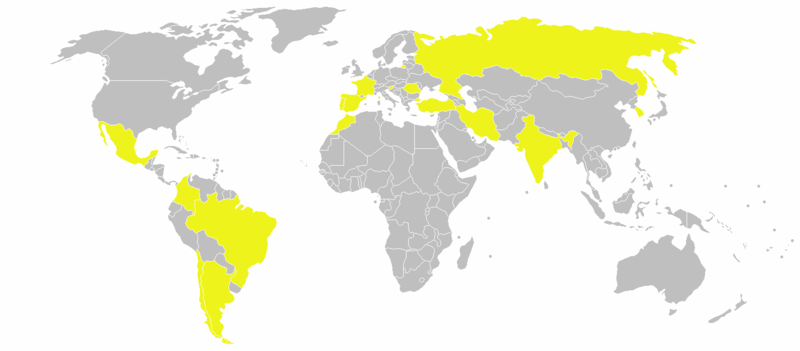 |
| Global locations of Renault factories |
In the twenty-first century, Renault was to foster a reputation for distinctive, outlandish design. The second generation of the Laguna and Mégane featured ambitious, angular designs which turned out to be successful, with the 2000 Laguna being the first European family car to feature "keyless" entry and ignition. Less successful were the company's more upmarket models. The Avantime, a bizarre coupé / multi-purpose vehicle, sold very poorly and was quickly discontinued while the luxury Vel Satis model did not sell as well as hoped. However, the design inspired the lines of the second-generation Mégane, the most successful car of the maker. As well as its distinctive styling, Renault was to become known for its car safety. The Laguna was the first car ever to achieve a 5 star rating; in 2004 the Modus was the first to achieve this rating in its category.
In April 2010, Renault-Nissan announced a new alliance with Mercedes-Benz parent company Daimler with Renault supplying Mercedes-Benz with its brand new 1.6 L turbodiesel engine and Mercedes-Benz to provide a 2.0 L four-cylinder petrol engine to Renault-Nissan. The resulting new alliance is to also develop a new model to replace the Smart with a new model based on the Renault Twingo.
In February 2010, Renault opened a new production factory in Tangier, Morocco, with an annual output capacity of 170,000 vehicles. Initially, it will manufacture the new Dacia Lodgy and, starting the second half of 2013, the second generation Dacia Sandero. According to Renault, the new factory emits zero carbon and industrial liquid discharges.
In December 2012 the Algeria's National Investment Fund (FNI), the Société Nationale de Véhicules Industriels (SNVI), and Renault signed an agreement to establish a factory near the city of Oran, Algeria, with the aim of manufacturing Symbol units by 2014. The production output was estimated in 25,000 vehicles. The Algerian State will have a 51% stake in the facilities' property.
In April 2010, Renault-Nissan announced a new alliance with Mercedes-Benz parent company Daimler with Renault supplying Mercedes-Benz with its brand new 1.6 L turbodiesel engine and Mercedes-Benz to provide a 2.0 L four-cylinder petrol engine to Renault-Nissan. The resulting new alliance is to also develop a new model to replace the Smart with a new model based on the Renault Twingo.
In February 2010, Renault opened a new production factory in Tangier, Morocco, with an annual output capacity of 170,000 vehicles. Initially, it will manufacture the new Dacia Lodgy and, starting the second half of 2013, the second generation Dacia Sandero. According to Renault, the new factory emits zero carbon and industrial liquid discharges.
In December 2012 the Algeria's National Investment Fund (FNI), the Société Nationale de Véhicules Industriels (SNVI), and Renault signed an agreement to establish a factory near the city of Oran, Algeria, with the aim of manufacturing Symbol units by 2014. The production output was estimated in 25,000 vehicles. The Algerian State will have a 51% stake in the facilities' property.
Corporate governance
The government of France owns 15.7 per cent of the company. The company is administered by a board of directors composed of 19 members (10 of them being independent). As of April 2010, members of the board of directors include:
- Carlos Ghosn, Chairman and chief executive officer (and also Director of Alcoa, AvtoVAZ; President and chief executive officer of Nissan Motor Co., Ltd.; and Chairman of the Alliance Board: Renault-Nissan b.v.)
- Yves Audvard
- Patrick Biau
- Alexis Kohler, Director appointed by the French State
- Marc Ladreit de Lacharrière
- Philippe Lagayette
- Franck Riboud
- Luc Rousseau, Director appointed by the French State
- Hiroto Saikawa Executive Vice President Purchasing of Nissan
- Pascale Sourisse
Carlos Tavares is the company's chief operating officer and Thierry Moulonguet is chief financial officer. Louis Schweitzer was Chairman and CEO from 1992 to 2005, in succession to Raymond Lévy.
Head office
Renault's head office is in Boulogne-Billancourt. The head office is located near the old Renault factories; Renault has maintained a historical presence in Boulogne-Billancourt, as the historic Boulogne-Billancourt plant had Renault's activity since 1898.
Products and technologies
List of Renault car models
Category
|
Models
|
Current
models
|
Twizy, Twingo, Pulse, Wind, Scala, Modus, Clio, Symbol,
Sandero, Logan, Duster, Kangoo, Mégane, Fluence, Scénic, Laguna, Latitude,
Koleos, Espace, Zoe
|
Historic
models
|
Numeric:
3, 4, 5, 6, 7, 8, 9, 10, 11, 12,
14, 15, 16, 17, 18, 19, 20, 21, 25, 30, Pre-WWI:
40CV, AX, Taxi de la Marne, Towncar, Voiturette, Y,
Between
wars: Celtaquatre, Monaquatre,
Juvaquatre, KJ, KZ, GS, Monasix, NN, Novaquatre, Primaquatre, Reinastella,
Viva Grand Sport, Vivasix, Vivastella, Type MT
1945-1970: 4CV, Caravelle, Colorale, Dauphine, Dauphinoise, Floride,
Frégate, Ondine
1970-2009: Alliance/Encore, Fuego, Medallion, Premier, Torino,
Safrane, Rodeo, Avantime, Vel Satis, Virage
|
Concept
cars
|
Alpine 210 RS, Altica, Argos, Be Bop, Captur, DeZir, Egeus,
Etoile Filante, Fiftie, Frendzy, Nepta, Racoon, R-Space, Talisman, Z.E., Zo,
Zoom
|
Van
and trucks
|
Estafette, Fourgonette, Express, Kerax, Magnum, Mascott,
Master, Midlum, Maxity, Trafic, 50-series, B90 & B110
|
Motorsports
|
Renault
Sport: Grand Prix de l'A.C.F. 5 Turbo
Clio Williams Clio Renault Sport Spider Mégane Renault Sport Clio V6 Renault
Sport
Formula
One: RS01, RS10, RE20, RE30, RE40,
RE50, RE60, R202, R23, R24, R25, R26, R27, R28, R29, R30, R31
|
Current models
Current model line up, with calendar year of introduction or facelift:
- Captur (2013)
- Clio III (2005/2009; hatchback, 3 and 5-doors, Grand Tourer)
- Clio IV (2012–present; hatchback 5-door, estate)
- Espace IV (2002–present; also available as Grand Espace)
- Fluence (2010–present; saloon based on the Mégane III platform)
- Kangoo II (2009–present)
- Koleos (2008–present)
- Laguna III (2007–present; hatchback, Grand Tourer,coupe)
- Megane II (estate version sold in some markets as Grand Tour)
- Mégane III (2009–present)
- Pulse (2012–present; India only version of the Nissan Micra)
- Safrane II (2008)
- Scala (2012; India only version of Nissan Sunny)
- Scénic III (2009; also available as Grand Scénic)
- Symbol (2008; A 4-door sedan based on the Clio II platform, also known in some markets as the Thalia)
- Twingo II (2007)
- Wind (2010–present)
Dacia vehicles sold in some markets under the Renault marque:
- Duster (2009; 2- and 4-wheel-drive SUV)
- Logan (2004)
- Sandero (2008)
Renault Samsung vehicles sold in some markets under the Renault marque
- Latitude (2011; Renault Samsung SM5)
- Scala (2011; Renault Samsung SM3 CE)
- Talisman (2012; Renault Samsung SM7)
Renault light commercial vehicles:
- Kangoo Express (also sold in some markets as Nissan Kubistar and Mercedes-Benz Citan)
- Master (also sold in some markets as Nissan Interstar and Opel Movano)
- Trafic (a joint venture with Opel, sold in some markets as Opel Vivaro, Vauxhall Vivaro and Nissan Primastar)
Renault commercial vehicles
Renault SA ceased manufacturing large goods vehicles by 2004 when it sold its truck and military divisions to Volvo in 2001 (but still sold under the Renault Trucks name) and its bus and tram business to Irisbus in 1999. Renault's agricultural division was sold to CLAAS in 2004.
Renault concept cars
Renault has displayed numerous concept cars to show future design and technology directions. Since 2008 Renault displayed various all-electric car concepts under the name "Z.E.", starting with a concept based on the Renault Kangoo Be Bop. Further concepts and announcements followed, with a pledge to start production of the Fluence Z.E. saloon in 2011 and the Renault Zoe in 2012.
Renault also revealed the Ondelios hybrid concept in 2008. but this was overtaken by the Z.E. programme.
 |
| Renault Kangoo Z.E. Concept |
Electric vehicle partnerships
 |
| Renault Twizy used for pizza delivery being recharged in Münster, Germany |
From 2008, Renault entered a number of agreements for its planned zero-emissions products, including Israel, Portugal, Denmark, the U.S. states of Tennessee and Oregon, Yokohama in Japan and the Principality of Monaco. Serge Yoccoz is the electric vehicle project director.
In 2008 Renault-Nissan signed a deal to mass-produce electric cars for an initiative in Israel with Better Place, a US company developing new non-petroleum based transport infrastructure. Renault aimed to mass market 10,000 to 20,000 cars a year in Israel. Renault would also develop exchangeable batteries for the project. Renault also collaborated with Better Place to produce a network of all-electric vehicles and thousands ofcharging stations in Denmark, planned to be operational by 2011. The Renault Fluence Z.E., was selected for the Israel project, being the first zero-emission vehicle with a switchable battery, with trials in 2010 undertaken with the Renault Laguna. Renault ended the partnership in 2013, following Better Place's bankruptcy, with only 1000 vehicle sales in Israel and 240 in Denmark.
Renault-Nissan and the largest French electric utility, Electricite de France (EDF) signed an agreement to promote emission-free mobility in France. The partnership planned to pilot projects on battery management and charging infrastructure. Renault-Nissan also signed deals with Ireland's ESB, and in Milton Keynes as part of the UK's Plugged in Places national project.
In 2008 Renault-Nissan signed a deal to mass-produce electric cars for an initiative in Israel with Better Place, a US company developing new non-petroleum based transport infrastructure. Renault aimed to mass market 10,000 to 20,000 cars a year in Israel. Renault would also develop exchangeable batteries for the project. Renault also collaborated with Better Place to produce a network of all-electric vehicles and thousands ofcharging stations in Denmark, planned to be operational by 2011. The Renault Fluence Z.E., was selected for the Israel project, being the first zero-emission vehicle with a switchable battery, with trials in 2010 undertaken with the Renault Laguna. Renault ended the partnership in 2013, following Better Place's bankruptcy, with only 1000 vehicle sales in Israel and 240 in Denmark.
Renault-Nissan and the largest French electric utility, Electricite de France (EDF) signed an agreement to promote emission-free mobility in France. The partnership planned to pilot projects on battery management and charging infrastructure. Renault-Nissan also signed deals with Ireland's ESB, and in Milton Keynes as part of the UK's Plugged in Places national project.
"We have decided to introduce zero-emission vehicles as quickly as possible in order to ensure individual mobility against the background of high oil prices and better environmental protection" | ||
—Carlos Ghosn, CEO of Renault and Nissan
| ||
According to Ghosn, the Renault-Nissan alliance was a fundamental step in electric car development, and that although the two companies alone could produce an electric car, they both need each other for other issues like battery manufacturing, electric vehicle charging infrastructure, and business strategy.
| "I don't think either Renault or Nissan would have been able to launch an EV alone successfully. You can have an electric car alone. But what you cannot have is an EV business system, from batteries to recycling to cars to infrastructure to negotiation, by being alone." | ||
—Carlos Ghosn, CEO of Renault and Nissan
| ||
The Renault-Nissan group is a member of the PHEV Research Center.
Eco²
Renault introduced a new line of eco-friendly derivatives in 2007 marked eco² based on normal production cars. A minimum of 5% recycled plastic was used and at the end of the vehicles life the remains are 95% reusable. Eco²'s CO2 emissions were not to exceed 140g/km, or are biofuel compatible. At the 2008 Fleet World Honours, Renault was rewarded with the Environment Award. The chairman of Judges, George Emmerson, commented, “This was the most hotly contested category in the history of the Fleet World Honours, such is the clamour for organizations’ green credentials to be recognized. There were some very impressive entries, but the panel felt that Renault’s impressive range of low-emission vehicles was the most tangible, and the most quantifiable.
Vehicle conception
Design
During its early years, Renault only manufactured the cars' chassis, the bodywork was in charge of coachbuilders. The first car with Renault's optional bodywork was the "Taxi de la Marne" introduced in 1905.
In 1961, with the assistance of the independent designer Philippe Charbonneaux (responsible of the R8), was created Renault Styling as a department for design dependent on Engineering, under Gastone Juchet's leadership. In 1975, Robert Opron was named chief designer and Renault Styling was divided into three sub-departments: Interior, Exterior and Advanced Design. The following years saw the introduction of a number of relevant cars for the marque, including the Fuego and the 11.
In 1987, Renault hired Patrick le Quément as chief designer and created the Industrial Design Department to replace Renault Styling. The new division incorporated a new, more complex, management system, with a great increment in technologies and personnel. Renault gave it the same importance as Engineering and Product Planning, making it to participate in product development. Le Quément was responsible of bold designs such as the Mégane II and the Vel Satis, giving Renault a more coherent and stylish image. In 1995, Design and Quality were merged under le Quément direction. Later, the new department was moved to Guyancourt's Technocentre, which also became the base for Engineering and Product Planning. Design was divided intro three sections: Automobile Design; Truck, LCV and Bus Design; and Concept Cars and Advanced Design. During the next years were created satellite centers in Spain (1999), Paris (2000), South Korea (2003), Romania (2007), India (2007) and Brazil (2008).
At the end of 2009, le Quément was replaced by Laurens van den Acker, which introduced the "cycle of life" concept to Renault's design.
In 1961, with the assistance of the independent designer Philippe Charbonneaux (responsible of the R8), was created Renault Styling as a department for design dependent on Engineering, under Gastone Juchet's leadership. In 1975, Robert Opron was named chief designer and Renault Styling was divided into three sub-departments: Interior, Exterior and Advanced Design. The following years saw the introduction of a number of relevant cars for the marque, including the Fuego and the 11.
In 1987, Renault hired Patrick le Quément as chief designer and created the Industrial Design Department to replace Renault Styling. The new division incorporated a new, more complex, management system, with a great increment in technologies and personnel. Renault gave it the same importance as Engineering and Product Planning, making it to participate in product development. Le Quément was responsible of bold designs such as the Mégane II and the Vel Satis, giving Renault a more coherent and stylish image. In 1995, Design and Quality were merged under le Quément direction. Later, the new department was moved to Guyancourt's Technocentre, which also became the base for Engineering and Product Planning. Design was divided intro three sections: Automobile Design; Truck, LCV and Bus Design; and Concept Cars and Advanced Design. During the next years were created satellite centers in Spain (1999), Paris (2000), South Korea (2003), Romania (2007), India (2007) and Brazil (2008).
At the end of 2009, le Quément was replaced by Laurens van den Acker, which introduced the "cycle of life" concept to Renault's design.
Engineering and Product Planning
 |
| View of the Technocentre from the Jardin des Gogottes |
The main Renault's engineering center is located at the Technocentre. Satellite centers exist, including: Renault Technologies Americas (with branches in Argentina, Brazil, Chile, Colombia and Mexico), Renault Technologies Romania (branches in Morocco, Russia, Slovenia and Turkey) and Renault Technologies Spain (branch in Portugal). As of 2013, Renault's engineering section has over 6500 employees world-wide, of which 34% are engineers and 63% technicians. The engines' development is in charge of a specific division, Renault Powertrains, which employs nearly 65 engineers.
As of 2013 Engineering and Product Planning are directed by Jean-Michel Billig and Philippe Klein respectively.
As of 2013 Engineering and Product Planning are directed by Jean-Michel Billig and Philippe Klein respectively.
Technocentre
The Renault Technocentre is the main research and development facility of Renault. It is located in Guyancourt and its construction was completed in 1998. It covers an area of 150 hectares and integrates all departments involved in developing new products and industrial processes (design, engineering, product planning) as well as representatives of suppliers. The Technocentre gathers more than 8000 employees.
The Technocentre was one of the first enterprises to have real-time life-size 3D modelling systems.
The Technocentre was one of the first enterprises to have real-time life-size 3D modelling systems.
Renault Tech
Renault Tech is a division of Renault Sport Technologies, headquartered in Les Ulis. It was established in 2008 and is in charge of modifying cars and vans for special purposes (transporting people with reduced mobility, driving school cars, business fleets).
Subsidiaries and alliances
 |
| Renault España offices in Madrid |
Renault-Nissan
Renault has a 43.4% stake in Nissan, and Nissan holds a 15% stake (with no voting rights) in Renault, thereby giving it effective control. Renault has a 50% stake in the joint venture Renault-Nissan b.v., which was established to manage synergies in the Renault-Nissan alliance. The company is responsible for the management of two joint companies, RNPO (Renault Nissan Purchasing Organization) and RNIS (Renault-Nissan Information Services). Combined vehicle sales in 2008 reached 6.9 million (including AvtoVAZ), making the Renault-Nissan Alliance the world’s third-largest automotive group.
As well as sharing a number of engines in the alliance and joint-development of zero-emissions technology, Nissan increased its presence in Europe by badging various Renault van models such as the Renault Kangoo/Nissan Kubistar, Renault Master/Nissan Interstar, Renault Trafic/Nissan Primastar. Some passenger cars have also been badged-engineered, such as the Renault Clio based Nissan Platina in Brazil. The "Renault Production System" standard used by all Renault factories borrowed extensively from the "Nissan Production Way" and has resulted in Renault productivity improving by 15%. The alliance has led to the loss of 21,000 jobs, the closure of three assembly plants and two powertrain plants.
In March 2010 the Renault-Nissan alliance opened its first joint facility in Chennai, India, investing 45 billion rupees (US$991.1 million). The facility builds the Nissan Micra, and the Renault Fluence and Renault Koleos are intended to be assembled there from completely knocked-down units. As a result of opening its own factory, Renault ended its five-year Mahindra Renault joint venture with Mahindra & Mahindra company to make and sell the Renault Logan in India.
As well as sharing a number of engines in the alliance and joint-development of zero-emissions technology, Nissan increased its presence in Europe by badging various Renault van models such as the Renault Kangoo/Nissan Kubistar, Renault Master/Nissan Interstar, Renault Trafic/Nissan Primastar. Some passenger cars have also been badged-engineered, such as the Renault Clio based Nissan Platina in Brazil. The "Renault Production System" standard used by all Renault factories borrowed extensively from the "Nissan Production Way" and has resulted in Renault productivity improving by 15%. The alliance has led to the loss of 21,000 jobs, the closure of three assembly plants and two powertrain plants.
In March 2010 the Renault-Nissan alliance opened its first joint facility in Chennai, India, investing 45 billion rupees (US$991.1 million). The facility builds the Nissan Micra, and the Renault Fluence and Renault Koleos are intended to be assembled there from completely knocked-down units. As a result of opening its own factory, Renault ended its five-year Mahindra Renault joint venture with Mahindra & Mahindra company to make and sell the Renault Logan in India.
Renault-Nissan and Daimler alliance
On 7 April 2010 Renault-Nissan executive, Carlos Ghosn and Daimler AG executive, Dieter Zetsche announced a partnership between the three companies in a joint press conference. Under the terms of a deal, Daimler acquired a 3.1 per cent stake in Renault-Nissan and Renault and Nissan each take a 1.55 per cent stake in Daimler.
Dacia
Main article: Automobile Dacia
The Romanian based manufacturer Automobile Dacia has been a subsidiary since 1999 with 99.43% owned by Renault.
The Romanian based manufacturer Automobile Dacia has been a subsidiary since 1999 with 99.43% owned by Renault.
Renault Samsung Motors
Main article: Renault Samsung Motors
Renault acquired the car division of Samsung on 1 September 2000 in a $560m deal for 70% of the company, eventually rising to 80.1%.
Renault acquired the car division of Samsung on 1 September 2000 in a $560m deal for 70% of the company, eventually rising to 80.1%.
AvtoVAZ
In February 2008 Renault acquired a 25% share in AvtoVAZ, known for its Lada range of vehicles. For a long time needing to modernize its technology, VAZ was seeking a strategic partnership since the late nineties. Its owners tried to form an alliance with various foreign auto manufacturers, such as General Motors. However, most of these attempts weren't successful and generally fell through.
Renault was in talks with VAZ on and off since 2005, initially insisting on CKD assembly of Logan cars with its facilities, while VAZ intended to keep its own Lada brand and only wished to acquire a new platform and engine. After several rounds of talks, between which VAZ also sought alliance with Fiat and Magna, Renault agreed to the partnership under terms not unlike the earlier Nissan deal. Renault and Rosoboronexport, the state corporation that is a major stockholder of VAZ, discussed Renault increasing its stake in VAZ to 50%.
Renault was in talks with VAZ on and off since 2005, initially insisting on CKD assembly of Logan cars with its facilities, while VAZ intended to keep its own Lada brand and only wished to acquire a new platform and engine. After several rounds of talks, between which VAZ also sought alliance with Fiat and Magna, Renault agreed to the partnership under terms not unlike the earlier Nissan deal. Renault and Rosoboronexport, the state corporation that is a major stockholder of VAZ, discussed Renault increasing its stake in VAZ to 50%.
RCI Banque
RCI Banque is a wholly owned Renault's subsidiary which provides financial services for the Renault brands (worldwide) and the Nissan brands (in Europe, Russia and South America).
Renault Retail Group
Renault Retail Group is Renault's wholly owned automobile distributor for Europe. Since its inception, Renault developed a retail network. In 1997, the French branches were merged to establish the subsidiary Renault France Automobiles (RFA). In 2001, it served as the basis for Renault Europe Automobiles (REA), which was created to manage sales in Europe. In 2008, the company adopted its current name. Renault Retail Group operates in France, Austria, Belgium, the Czech Republic, Germany, Ireland, Italy, Luxembourg, Poland, Portugal, Spain, Switzerland, and the United Kingdom.
Manufacturing subsidiaries
French factories
- Batilly, subsidiary Société de Véhicules Automobiles de Batilly (SoVAB).
- Choisy.
- Cléon.
- Dieppe, Société des Automobiles Alpine Caterham (SAAC), a joint venture equally owned by Renault and Caterham Cars.
- Douai.
- Douvrin, subsidiary Française de Mécanique (FM), equally owned by Renault and PSA Peugeot Citroën.
- Flins.
- Grand-Couronne.
- Le Mans, subsidiary Auto Châssis International (ACI).
- Maubeuge, subsidiary Maubeuge Construction Automobile (MCA).
- Ruitz, subsidiary Société des Transmissions Automatiques (STA) owned by Renault (80%) and PSA Peugeot Citroën (20%).
- Sandouville.
Manufacturing subsidiaries outside France
- Avtoframos (Russia).
- Oyak-Renault (Turkey), a joint venture between Renault and Oyak (Turkey's Armed Forces Pension Fund), established in 1969.
- Renault Argentina (Argentina).
- Renault do Brasil (Brazil).
- Renault España (Spain).
- Renault Industrie Belgique S.A. / Renault Industrie België N.V. (Belgium)
- Renault Med (Morocco), a subsidiary operating the Renault-Nissan Alliance factory in Tangier.
- Renault México (Mexico, cars manufactured in the Nissan's Aguascalientes plant).
- Renault Pars (Iran), a joint venture established in 2004 and owned by Renault (51%) and Iran's Industrial Development Renovation Organisation (IDRO) (49%).
- Renault South Africa (South Africa, cars manufactured in the Nissan’s Rosslyn plant).
- Revoz (Slovenia).
- Sofasa (Colombia).
- Somaca (Morocco).
Renault India
Renault India Private Limited is the Indian subsidiary of Renault established in 2005. Originally Renault's presence in India was as a result of the joint venture Mahindra Renault which manufactured the Dacia Logan until 2011, when it was facelifted and re-launched as the Mahindra Verito. Sales of Renault badged cars commenced in 2011 with the Fluence and Koleos, followed in 2012 by the Pulse, a rebadged Nissan Micra and the Duster SUV.
In 2010 Renault Nissan Automotive India opened a manufacturing plant in Chennai, which will have a capacity of 400,000 vehicles per annum by 2015 divided equally between Renault India Private Limited and Nissan Motor India Private Limited.
In 2010 Renault Nissan Automotive India opened a manufacturing plant in Chennai, which will have a capacity of 400,000 vehicles per annum by 2015 divided equally between Renault India Private Limited and Nissan Motor India Private Limited.
Proposed alliances
On 30 June 2006, the media reported that General Motors convened an emergency board meeting to discuss a proposal by shareholder Kirk Kerkorian to form an alliance between GM and Renault-Nissan. The hastily arranged meeting suggests that GM's board was treating Kerkorian's proposal with urgency. There was speculation that a GM–Renault–Nissan alliance could pave the way for Renault's return to the U.S. market. However, GM CEO Richard Wagoner felt that an alliance would benefit Renault's shareholders more than those of GM, and that GM should receive some compensation for it. This did not sit well with Renault; subsequently, talks between GM and Renault ended on 4 October 2006.
In 2007 Renault-Nissan were in talks with Indian manufacturer Bajaj Auto to develop a new ultra-low-cost car along the lines of the Tata Nano. Renault's existing partner in India, Mahindra, was not interested in taking part in the project despite already manufacturing the Dacia Logan. The proposed deal for a split of the joint venture (50% Bajaj and 25% each for Renault and Nissan) did not come to fruition, when in late 2009 it was announced that Bajaj would develop and manufacturer the vehicle itself and supply Renault-Nissan with completed cars.
On 7 October 2008, the Wall Street Journal reported that a Renault executive said the company was interested in acquiring or partnering with Chrysler, which at the time was owned by the private equity firm Cerberus Capital Management. On 11 October 2008, the New York Times reported that General Motors, Nissan and Renault had all been in discussions over the past month with Cerberus about acquiring Chrysler.
In 2007 Renault-Nissan were in talks with Indian manufacturer Bajaj Auto to develop a new ultra-low-cost car along the lines of the Tata Nano. Renault's existing partner in India, Mahindra, was not interested in taking part in the project despite already manufacturing the Dacia Logan. The proposed deal for a split of the joint venture (50% Bajaj and 25% each for Renault and Nissan) did not come to fruition, when in late 2009 it was announced that Bajaj would develop and manufacturer the vehicle itself and supply Renault-Nissan with completed cars.
On 7 October 2008, the Wall Street Journal reported that a Renault executive said the company was interested in acquiring or partnering with Chrysler, which at the time was owned by the private equity firm Cerberus Capital Management. On 11 October 2008, the New York Times reported that General Motors, Nissan and Renault had all been in discussions over the past month with Cerberus about acquiring Chrysler.
Motorsport
 |
| 1907 Renault-built Replica of their French Grand Prix winner, one of 4 known to exist |
 |
| Renault Megane II F1 team Edition |
Formula One
Renault introduced the turbo engine to Formula One when they debuted their first car, the Renault RS01 at Silverstone in 1977 and the Renault team continued until 1986. From 1989 Renault supplied engines to the successful Williams-Renault car.
Renault took over the Benetton Formula team in 2000 for the 2001 season and became Renault F1 in 2002. In 2005 and 2006 the team won the Constructors' and Drivers' titles (with Fernando Alonso). At the 2005 French Grand Prix Carlos Ghosn set out his policy regarding the company's involvement in motorsport:
Renault took over the Benetton Formula team in 2000 for the 2001 season and became Renault F1 in 2002. In 2005 and 2006 the team won the Constructors' and Drivers' titles (with Fernando Alonso). At the 2005 French Grand Prix Carlos Ghosn set out his policy regarding the company's involvement in motorsport:
"We are not in Formula One out of habit or tradition. We're here to show our talent and that we can do it properly… Formula One is a cost if you don't get the results. Formula One is an investment if you do have them and know how to exploit them."
Renault powered the winning 2010 Red Bull Racing team, and entered to a similar role with its old team in December 2010, when sold the final participation on it to the investment group Genii Capital, the main stakeholder since December 2009, ending Renault's direct role in running a F1 team for the second time.
 |
| Fernando Alonso driving for Renault F1 at Indianapolis in 2005, the year in which the team won their first Formula One championship |
Rallying
Renault has been involved in rallying from an early era. Marcel Renault won the 1902 Rallye Paris-Vienna, but lost his life while competing in the 1903 Paris-Madrid.
During the 50s and 60s of the 20th century, Renault manufactured several small cars with rear wheel drive in some cases, as the R4, the R8 or the Dauphine. These cars were well-adapted to the rally of the time, and the tuner Amedee Gordini collaborated with its performance. In the 1950s the Renault Dauphine won several international rallies, including the 1956 Mille Miglia and the 1958 Monte Carlo Rally.
In 1973, Renault took control of Automobiles Alpine, a related company for several years, which was responsible for building successful rally cars such as the A110. A highly evolved A110 won the first World Rally Championship, representing Alpine-Renault.
In 1976, the Alpine's competition department and the Gordini factory at Viry-Chatillon were merged into Renault Sport. The focus shifted to Formula One, although Renault achieved several victories including the 1981 Monte Carlo Rally with the Renault 5 Turbo before retirement from the world rally in late 1994.
Renault cars also participate of cross-country races, most prominently the Dakar Rally. The Marreau brothers won the 1982 edition driving a Renault 20 Turbo 4x4 prototype. Later, Renault motorized and sponsored the Schlesser-Renault Elf buggies which won the 1999 and 2000 editions. The 1999 car was the first two-wheel drive Dakar's winner.
During the 50s and 60s of the 20th century, Renault manufactured several small cars with rear wheel drive in some cases, as the R4, the R8 or the Dauphine. These cars were well-adapted to the rally of the time, and the tuner Amedee Gordini collaborated with its performance. In the 1950s the Renault Dauphine won several international rallies, including the 1956 Mille Miglia and the 1958 Monte Carlo Rally.
In 1973, Renault took control of Automobiles Alpine, a related company for several years, which was responsible for building successful rally cars such as the A110. A highly evolved A110 won the first World Rally Championship, representing Alpine-Renault.
In 1976, the Alpine's competition department and the Gordini factory at Viry-Chatillon were merged into Renault Sport. The focus shifted to Formula One, although Renault achieved several victories including the 1981 Monte Carlo Rally with the Renault 5 Turbo before retirement from the world rally in late 1994.
Renault cars also participate of cross-country races, most prominently the Dakar Rally. The Marreau brothers won the 1982 edition driving a Renault 20 Turbo 4x4 prototype. Later, Renault motorized and sponsored the Schlesser-Renault Elf buggies which won the 1999 and 2000 editions. The 1999 car was the first two-wheel drive Dakar's winner.
Sponsorship
From 1983 to 1984, Renault sponsored an Unlimited hydroplane in the United States. Owned by Jerry Schoenith and driven by E. Milner Irvin, the Miss Renault was powered by a turbocharged Allison V-1710 piston engine. Miss Renault won the 1983 World Championship race in Houston, Texas.
Renault in the UK
The first popular Renault motor vehicles to achieve sustained sales success in the United Kingdom were the R5 mini-car and R18, both of which attained six-digit sales figures during the late 1970s and early 1980s, although they failed to achieve anything like the volumes of established carmakers Ford, Vauxhall and Austin Rover.
Renault enjoyed a huge rise in popularity among British buyers on the arrival of the Clio supermini in early 1991. It was regularly among Britain's most popular cars each year during the 1990s and its successor (launched in 1998 alongside the final installment of the successful 'Nicole and Papa' advertising campaign), where the original model left off. The sedan/saloon version, called Thalia, was not launched in the UK.
Renault went from strength to strength in the UK during the 2000s following the introduction of its distinctively styled Mégane hatchback in November 2002. Any suggestions that its quirky styling would not fit in with the tastes of British buyers were quickly confounded in 2005 when it was the fourth best selling car in Britain. By 2006 Renault was the third most popular brand of car in the United Kingdom, only Ford and Vauxhall sold more units.
In 2007 Renault UK lost a US$2 million law suit against an independent distributor who had placed orders for 217 cars under a discount scheme intended for members of the British Airline Pilots Association- 3 were legitimate- because they had "made a profit of some sort on every vehicle". Two Renault employees were criticized for having "turned a blind eye" to the very large number of orders.
By 2008, Renault sales had started declining in the UK and the marque was down to eighth most popular brand with 89,570 sales (down 29% compared to 2007) and considerably less than the 194,685 sales made in 2002. Renault suffered more than most main brands in the UK during 2009 as the recession deepened and ended the year with 63,174 sales and a reduced 3.17% market share. In 2010, however, as the economy returned to growth, Renault sold more than 95,000 cars and boosted its market share to 4.71%. However, in 2011 Renault's fortunes fell again. It sold 68,449 cars, down more than 28 per cent on the year before, a 3.53 per cent market share.
The Koleos SUV was discontinued in the UK in August 2010 due to slow sales under 3,000 units. In late 2011, Renault announced that the Laguna, Espace, Kangoo, Modus, and Wind lines would be discontinued in the UK due to cutting costs and 55 of its 190 British dealerships would be closed. This change took place in early 2012, leaving the current range limited to the Twingo, Clio, Mégane, Scénic, and the new Twizy and Fluence Z.E. models, and Renault feared that the company's overall sales figures in Britain for 2012 would be around 51,000 – barely a quarter of the record 190,000 sales in 2005.
Renault enjoyed a huge rise in popularity among British buyers on the arrival of the Clio supermini in early 1991. It was regularly among Britain's most popular cars each year during the 1990s and its successor (launched in 1998 alongside the final installment of the successful 'Nicole and Papa' advertising campaign), where the original model left off. The sedan/saloon version, called Thalia, was not launched in the UK.
Renault went from strength to strength in the UK during the 2000s following the introduction of its distinctively styled Mégane hatchback in November 2002. Any suggestions that its quirky styling would not fit in with the tastes of British buyers were quickly confounded in 2005 when it was the fourth best selling car in Britain. By 2006 Renault was the third most popular brand of car in the United Kingdom, only Ford and Vauxhall sold more units.
In 2007 Renault UK lost a US$2 million law suit against an independent distributor who had placed orders for 217 cars under a discount scheme intended for members of the British Airline Pilots Association- 3 were legitimate- because they had "made a profit of some sort on every vehicle". Two Renault employees were criticized for having "turned a blind eye" to the very large number of orders.
By 2008, Renault sales had started declining in the UK and the marque was down to eighth most popular brand with 89,570 sales (down 29% compared to 2007) and considerably less than the 194,685 sales made in 2002. Renault suffered more than most main brands in the UK during 2009 as the recession deepened and ended the year with 63,174 sales and a reduced 3.17% market share. In 2010, however, as the economy returned to growth, Renault sold more than 95,000 cars and boosted its market share to 4.71%. However, in 2011 Renault's fortunes fell again. It sold 68,449 cars, down more than 28 per cent on the year before, a 3.53 per cent market share.
The Koleos SUV was discontinued in the UK in August 2010 due to slow sales under 3,000 units. In late 2011, Renault announced that the Laguna, Espace, Kangoo, Modus, and Wind lines would be discontinued in the UK due to cutting costs and 55 of its 190 British dealerships would be closed. This change took place in early 2012, leaving the current range limited to the Twingo, Clio, Mégane, Scénic, and the new Twizy and Fluence Z.E. models, and Renault feared that the company's overall sales figures in Britain for 2012 would be around 51,000 – barely a quarter of the record 190,000 sales in 2005.
Accolades
Renault cars have performed well in the European Car of the Year awards.
- 1966: Renault 16
- 1982: Renault 9
- 1991: Renault Clio
- 1997: Renault Scénic
- 2003: Renault Mégane II
- 2006: Renault Clio III
The inaugural Australian Wheels Car of the Year award was won by the R8 in 1963 (particularly in consideration to its four-wheel disc brake system), and Renault won again in 1970 when the Renault 12 won the prestigious award.
Marketing and branding
Renault badge
|
|


The first badge of Renault was introduced in 1900 and consisted in Renault brothers' intertwined initials. When the company started mass production in 1906, it adopted a gear-shaped logo with a car inside it. After the World War I the company used a special logo depicting a FT-17 tank. In 1923 it introduced a new circle-shaped badge, which was replaced by the today most widely known "diamond" in 1925.
The Renault diamond logo has been through many iterations since it was first used. To modernize its image, Renault asked Victor Vasarely to design its new logo in 1972. Vasarely had already worked in the advertising world and he placed his graphic talents at the service of the brand. The transformed logo maintained the diamond shape but gained cleaner, more dynamic and angular lines. A seventies design that has since been revised to reflect the new more rounded lines of the brand’s styling cues. The current diamond badge has been in use since 1992, though the Renault brand logo for web and print use was updated two times since then. In 2004 was incorporated a more realistic badge representation inside a yellow square with the word "Renault" in Renault Identité typeface besides it. In 2007, Renault commissioned to Saguez & Partners a new redesign. In this new version, currently in use, the word "Renault" was included inside the yellow square.
The yellow associated with the company appeared initially in the diamond badge of 1946, when Renault was nationalised.
The Renault diamond logo has been through many iterations since it was first used. To modernize its image, Renault asked Victor Vasarely to design its new logo in 1972. Vasarely had already worked in the advertising world and he placed his graphic talents at the service of the brand. The transformed logo maintained the diamond shape but gained cleaner, more dynamic and angular lines. A seventies design that has since been revised to reflect the new more rounded lines of the brand’s styling cues. The current diamond badge has been in use since 1992, though the Renault brand logo for web and print use was updated two times since then. In 2004 was incorporated a more realistic badge representation inside a yellow square with the word "Renault" in Renault Identité typeface besides it. In 2007, Renault commissioned to Saguez & Partners a new redesign. In this new version, currently in use, the word "Renault" was included inside the yellow square.
The yellow associated with the company appeared initially in the diamond badge of 1946, when Renault was nationalised.
Typeface
Both the Renault logo and its documentation (technical as well as commercial) historically used a specially designed typeface called Renault MN, developed by British firm Wolff Olins. This type family is said to have been designed not for prestige reasons, but mainly to save costs at a time where the use of typefaces was more costly than it is now. In 2004, French typeface designer Jean-François Porchez was commissioned to design a replacement. This was shown in October of that year and is called Renault Identité.
Since 2007, as part of the Saguez & Partners revamp of Renault's visual image, all the graphic advertising make use of the Helvetica Neue Condensed typeface.
Since 2007, as part of the Saguez & Partners revamp of Renault's visual image, all the graphic advertising make use of the Helvetica Neue Condensed typeface.
L'Atelier Renault Paris
 |
| L'Atelier Renault in Paris |
Renault's flagship showroom is located on the Champs Elysees in Paris, where other car manufacturers such as Peugeot, Citroen and Toyota also have showrooms. It was opened in November 2000, located on the site of Pub Renault, which ran from 1963 to 1999. The first Renault's venue at the location was the Magasin Renault established in 1910, a pioneering car showroom, in a building leased by Louis Renault.
L'Atelier currently features a Renault Boutique as well as regular exhibitions featuring Renault and Dacia cars, while an upmarket restaurant is located on the second floor, looking out onto the Champs Elysees. The ground floor can hold up to five different exhibitions at any one time. As of March 2009, 20 million visitors have visited L'Atelier Renault.
L'Atelier currently features a Renault Boutique as well as regular exhibitions featuring Renault and Dacia cars, while an upmarket restaurant is located on the second floor, looking out onto the Champs Elysees. The ground floor can hold up to five different exhibitions at any one time. As of March 2009, 20 million visitors have visited L'Atelier Renault.
Music
Throughout the 1980s and 1990s, Renault's European advertising made extensive use of Robert Palmer's song "Johnny and Mary". The earlier television advertisements used Palmer's original version, while a range of special recordings in different styles were produced during the 1990s; most famously Martin Taylor's acoustic interpretation which he released on his album Spirit of Django.
Sponsorship
Renault sponsored and was heavily featured in Le Visionarium a time-travel film at Disneyland Paris.
Last updated on 20 September 2013 at 07:19.
Read More »


