• 2013 Bugatti Veyron Grand Sport Vitesse

    From Alsace, France. Maximum output 1200 hp @ 6400 rpm and torque 1,500 Nm @ 3000-5000 rpm. Acceleration (0-100 kmh) in 2.6 sec and top speed is 408.84 kmh

  • 2012 Mitsubishi Lancer Evolution X

    From Okayama, Japan. Maximum output 300 hp @ 6500 rpm and torque 422 Nm @ 3500 rpm. Acceleration (0-100 kmh) in 4.5 sec

  • 2013 Audi R8 V10 Plus

    From Neckarsulm, Gerrmany. Maximum output 525 hp @ 8000 rpm and torque 530 Nm @ 6500 rpm. Acceleration (0-100 kmh) in 3.7 sec and top speed is 333 kmh

  • 2012 Aston Martin One-77

    From Warwickshire, United Kingdom. Maximum output 760 hp and torque 750 Nm. Acceleration (-0-100 kmh) in 3.7 sec and top speed is 354 kmh

  • 2013 Volkswagen Passat 1.8 TSI

    From Emden, Germany. Maximum output 160 hp @ 5000-6200 rpm and torque 250 Nm @ 1500-4200 rpm. Acceleration (0-100 kmh) in 8.6 sec and top speed is 220 kmh

  • 2011 Koenigsegg Agera R

    From Ängelholm, Sweden. Maximum output 1139 hp @ 7100 rpm and torque 1200 Nm @ 4100 rpm. Acceleration (0-100 kmh) in 2.8 sec and top speed is 438 kmh

  • 2014 BMW i8

    From Leipzig, Germany. Maximum output 362 hp and torque 570 Nm (combined petrol and hybrid). Mid-range acceleration (80-120 kmh) in 2.6 sec and electronically controlled top speed is 250 kmh

  • 2014 Lamborghini Aventador LP 700-4 Roadster

    From Sant'Agata Bolognese, Italy. Maximum output 700 hp @ 8250 rpm and torque 690Nm @ 5500 rpm. Acceleration (0-100 kmh) in 2.9 sec and top speed is 349 kmh

  • 2015 Ford Mustang GT

    From Flat Rock, Michigan. Maximum output 435 hp and torque 542 Nm

  • 2012 Ferrari F12berlinetta

    From Maranello, Italy. Maximum output 740 hp @ 8250 rpm and torque 690 Nm @ 6000 rpm. Acceleration (0-100kmh) in 3.1 sec and top speed is 362 kmh

Translate

Showing posts with label BMW. Show all posts

Goggomobil

0 comments
Goggomobil
Goggomobil
Overview
Manufacturer
Hans Glas GmbH (1955–1966)
BMW (1966–1969)
Production
1955 – 30 June 1969
Body and chassis
Class
Microcar
Layout
RR layout
Body style
2-door sedan
2-door coupe
2-door convertible
Van
Pickup
Roadster (Goggomobil Dart)
Vehicles
Goggomobil T (2-door sedan)
Goggomobil TS (2-door coupe)
Goggomobil TL (van)
Goggomobil Dart (roadster)
Powertrain
Engine
Two-stroke straight-two engine
245 cc, 13.6 hp (10.1 kW) (DIN)
293 cc, 14.8 hp (11.0 kW) (DIN)
392 cc, 18.5 hp (13.8 kW) (DIN)
Transmission
4-speed manual
electromagnetic pre-selector transmission optional
Dimensions
Wheelbase
1,800 mm (71 in)
Length
2-door sedan: 2,900 mm (110 in)
2-door coupe: 3,035 mm (119.5 in)
Van: 2,910 mm (115 in)
Width
2-door sedan: 1,260 mm (50 in)
2-door coupe: 1,370 mm (54 in)
Van: 1,316 mm (51.8 in)
Height
2-door sedan: 1,310 mm (52 in)
2-door coupe: 1,235 mm (48.6 in)
Van: 1,695 mm (66.7 in)
Goggomobil was a series of microcars produced in the Bavarian town Dingolfing after World War II by Glas.
Glas produced three models on the Goggomobil platform: the Goggomobil T sedan, the Goggomobil TS coupé, and the Goggomobil TL van. The engine was an air-cooled, two-stroke, two-cylinder unit originally displacing 250 cc, but later available in increased sizes of 300 cc and 400 cc. It had an electric pre-selective transmission built by Getrag and a manual clutch. The engine was behind the rear wheels. Suspension was independent all round using coil springs with swing axles.
214,313 sedans, 66,511 coupés, and 3,667 Transporter vans and pickups were built from 1955 to 1969.

T-Sedan

Goggomobil T250 with suicide doors and wind-up windows
The Goggomobil T250 was introduced by Glas at the 1954 IFMA international bicycle and motorcycle show. The T250 was a conventional-looking two door sedan with a rear-mounted 245 cc air-cooled two-stroke straight twin engine.
Design changes were made to the T250 in 1957. Two windshield wipers were used instead of the earlier system with one wiper, and the sliding windows in the doors were changed to wind-up windows. Also at this time the T300 and T400 became available; these had larger engines of 300 cc and 400 cc respectively.
The last design change for the T sedan came in 1964, when the rear-hinged suicide doors were replaced by conventional front-hinged doors.
214,313 sedans were built when production ended on 30 June 1969.

TS Coupe

TS 250 Coupe
The Goggomobil TS 2+2 coupe was introduced at the 1957 IFMA show alongside the improved T sedan. It was available as the TS250, the TS300, and the TS400, the number reflecting the approximate engine size in cubic centimeters.
The only major design change to the TS coupe was the change from rear-hinged suicide doors to front-hinged conventional doors in 1964.
The TS coupe was always ten to twenty percent more expensive than the T sedan. Total production of TS coupes was 66,511.

TS 300 specification and performance

The specifications of a 1957 Goggomobil TS 300 Coupe are:
  • Configuration — Glas 2-stroke rear engine, 298 cc displacement
  • Engine — 2-cylinder, 2 stroke, air-cooled, 58 x 56 mm. bore and stroke, 6.0:1 compression, 15 hp. at 5,000 rpm, 24 Nm (17.4 lbft) torque.
  • Transmission — 4 speed plus reverse (with electric pre-selector as an available option).
  • Top Speed — 85 km/h (53 mph)
  • Tires — 4.80 x 10 inch.
  • Weight — 420 kg (926 lb).
  • Wheelbase — 1,800 mm (71 in)
  • Height - 1,200 mm (49 in)
  • Length - 2,910 mm (114.5 in)
  • Width - 1,300 mm (53 in)
A TS300 coupé tested by the British magazine The Motor in 1957 had a top speed of 59.2 mph (95.3 km/h) and could accelerate from 0 to 50 mph (80 km/h) in 27.9 seconds. A fuel consumption of 50.5 miles per imperial gallon (5.59 l/100 km; 42.1 mpg-US) was recorded. The test car cost £625 including taxes of £209 on the UK market.

TS 250 specifications

The specifications of a 1958 Goggomobil TS 250 Coupe are:
  • Configuration — Glas 2-stroke rear engine, 247 cc displacement
  • Engine — 2-cylinder, 2 stroke, air-cooled, 13.6 hp. at 5,000 rpm
  • Transmission — 4 speed plus reverse
  • Top Speed — 75 km/h (47 mph)
  • Tires — 4.40 x 10 inch
  • Weight — 415 kg (915 lb)

Goggomobil Transporter TL van

Goggomobil Transporter van
The Goggomobil Transporter, or Goggomobil TL, was introduced at the 1956 IFMA show. The Transporter was built largely at the request of the German Federal Postal Service, which procured more than 2,000 Transporters between October 1957 and November 1965.
The Transporter had sliding front doors. It was available as an enclosed van with double back doors or as a pickup with a tailgate to the open bed. Transporter pickups were often used by municipal services as snow plows or street sweepers.
3,667 Transporter vans and pickups were produced.

US export editions

Goggomobils were exported to the United States. These were special export versions, with the 400 cc engine, an automatic gasoline-oil mixer, and 7 inch sealed beam headlights as required by US regulations.

Goggomobil Dart

Main article: Goggomobil Dart
Goggomobil Dart
Between 1957 and 1961 some 700 sports cars called Goggomobil Darts were produced by Buckle Motors Pty Ltd in Sydney, Australia. Other Goggomobil models were also produced under licence, including saloon, coupe, coupe-convertible and light van variants. These were fitted with Australian produced fibreglass bodies in place of the steel bodies of their German counterparts. Australian production totalled approximately 5,000 units.


Back to Glas
Back to BMW
last updated on 11 December 2013 at 21:07.


CLICK link below to check the
Goggomobil Accessories and Parts in Germany
Goggomobile Accessories and Parts in Australia

Read More »

BMW 2 Series (F22)

0 comments
The BMW 2 Series will replace the 1 Series coupe and 1 Series convertible in the BMW lineup. It was announced on October 25th, 2013. This release is aimed to compete with new models from Audi and Mercedes-Benz, the A3 Sedan and the CLA Class, respectively.
Unlike the 1 Series, the 2 series feature sleeker headlamps and more aggressive front-end grill. The interior however is similar to that of the 1 Series hatchback.
BMW 2 Series
Overview
Manufacturer
BMW
Production
2013 – present
Body and chassis
Class
British: Small family car
European: C-segment
Body style
2-door coupé
Layout
FR layout
Related
BMW 1 Series
Dimensions
Wheelbase
Coupe: 2,690 mm (105.9 in)
Length
Coupe: 4,432 mm (174.5 in)
Width
Coupe: 1,774 mm (69.8 in)
Height
Coupe: 1,418 mm (55.8 in)
Chronology
Predecessor
BMW 1 Series (coupé/convertible)

Initial Release

The BMW 2 Series coupe was unveiled on the 25th of October, 2013 through the Internet. The 2-Series is generally sleeker and sportier than the outgoing 1-Series coupe it replaces. BMW's product manager Thomas Ebner said that "it is ready to countinue the success story of BMW Compact Coupes". Although it was the successor of the 1-Series coupe, it is continuing the BMW 02 coupes as a successor in that segment. The name, 2-Series, is based on that of the 02 Series of the 1960s. Currently at launch, there are the basic model 218d, 220d,220i, 225d and the range-topping BMW M235i internationally.
Back to BMW
Last updated on 12 November 2013 at 11:34.

Read More »

BMW Goldfish V16

1 comments
The BMW V16 engine known as the project Goldfish is a SOHC 32-valve V16 6.7 litre prototype automotive piston engine based on BMW M70 V12 engine.
Manufacturer
BMW Bayerische Motoren Werke
Production
1987
Configuration
V16

Development

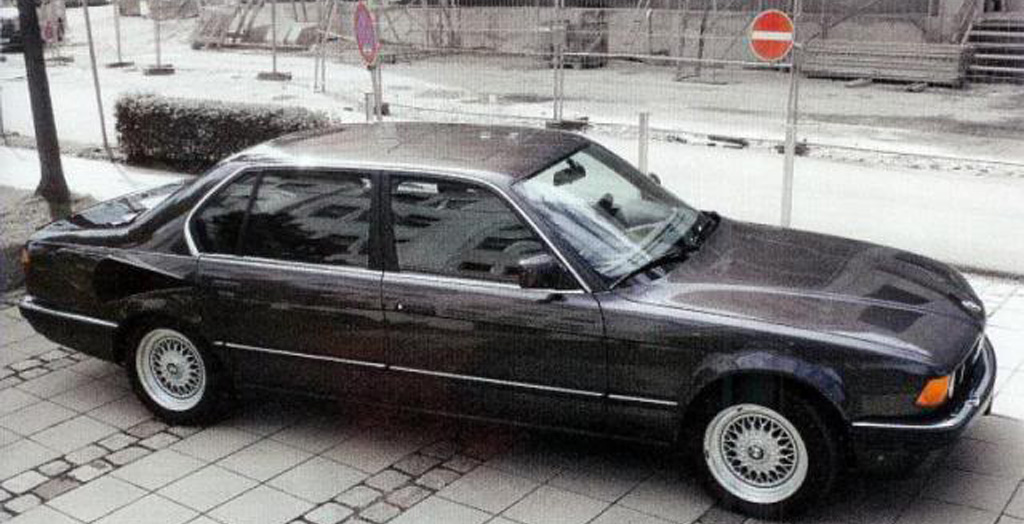
It was developed in late 1980s by BMW engineers as the top performance offering for the BMW 7-series (E32).
In July 1987 the development started and by the beginning of the 1988 the engine was ready. It was put on dynamometer in January 1988 and was tested throughout February 1988. Later it was installed in a modified long-based BMW 7-series (E32) and was mated with the 6-speed manual gearbox taken from BMW 8-series (E31).
The engine never reached production and remained to show the possibilities of BMW engineers.

Technology & Performance

The engine design virtually copies the BMW M70 V12 layout but with 4 more cylinders added.
  • 6651 cc V16 engine
  • Cast aluminium block and cylinder heads.
  • SOHC, 2 valves per cylinder.
  • Bore and stroke: 84 mm (3.3 in) x 75 mm (3.0 in). Bore spacing: 91 mm (3.6 in).
  • Compression ratio: 8.8:1
  • Maximum power: 408 hp (304 kW) @ 5200 rpm
  • Maximum torque: 637 N·m (470 lb·ft) torque @ 3900 rpm
  • Redline: 6000 rpm
  • Engine Management: 2 separate Bosch DME 3.3 for each bank
  • Dry weight: 310 kg (683 lb)
Back to BMW 7 Series
Back to BMW
Last updated on 10 August 2013 at 10:39.

Read More »

BMW X5

0 comments
Manufacturer
BMW
Production
1999 – present
Class
American: Mid-size CUV
European: J-segment
Body style
5-door SUV
Layout
Front engine, four wheel drive
The BMW X5 is a midsize luxury SUV (Sport Utility Vehicle) (J-segment in Europe) produced by BMW. The first generation of the X5, with the chassis code E53, made its debut in 1999. It was BMW's first SUV (Sport Utility Vehicle), also known as "Four-by-Four" (4x4) in the UK, which featured 4WD all-wheel drive and was available with either manual or automatic transmission. In 2006 the second generation X5 was launched, known internally as the E70, featuring the torque-split capable xDrive all-wheel drive system mated to an automatic transmission, and in 2009 the X5 M performance variant was released as a 2010 model.
BMW branded the X5 as a Sport Activity Vehicle (SAV) rather than an SUV, to emphasize its on-road ability despite its size. Like the Lexus RX 300, the X5 heralded the shift from light truck-based body-on-frame SUVs to crossovers underpinned by unibody car platforms that would come to fruition in the late 2000s. Among German luxury automakers, while the Mercedes-Benz M-Class had beaten the X5 to the market by a year, the X5 was the first to use a unibody chassis whereas the M-Class used a light truck platform until its second generation. While the Lexus RX is based on the Toyota Camry mass market sedan, the X5 shares its underpinnings with the BMW 5 Series performance luxury sedan.
X5s are manufactured in Greer, South Carolina at the Spartanburg BMW plant and in Mexico at the BMW de México Toluca plant. Since July 2009, some assembly operations are also performed in Kaliningrad, Russia by Avtotor.
Starting with the X5, BMW's Sport Activity Vehicle (SAV) series has since expanded to be derivatives of other BMW number-series models, first in 2003 with the BMW X3 compact luxury crossover, and then in 2008 with the BMW X6 midsize coupe luxury crossover which shares its platform with the X5.

E53 First generation (1999 to 2006)

BMW X5 E53
Manufacturer
BMW
Production
September 1999–September 2006
Assembly
Greer, South Carolina, United States (BMW US Mfg. Co.)
Toluca, Mexico (BMW de México)
Engine
3.0 L 225 hp I6
4.4 L 286 HP (2000–2003) 315 HP (2004–2006)  hp V8
4.6 L 347 hp V8
4.8 L 355 hp V8
3.0 L 193/218 hp I6 Diesel
Transmission
5-speed automatic
5-speed manual
6-speed automatic
6-speed manual
Wheelbase
111.0 in (2,819 mm)
Length
183.7 in (4,666 mm)
Width
73.7 in (1,872 mm)
Height
2000–2003 V8: 67.2 in (1,707 mm)
2001–2003 I6: 67.5 in (1,715 mm)
2004–2006 V8 4.8I: 67.9 in (1,725 mm)
2004–2006 I6: 69.3 in (1,760 mm)
Related
Main article: BMW X5 (E53)
The BMW E53 X5 crossover vehicle was manufactured between 1999 and 2006. Production ceased in September 2006 and has been replaced by the BMW X5 (E70).
The E53 was developed at a time when BMW owned Land Rover and benefitted from Land Rover technology. It shared components with the Land Rover Range Rover HSE model; specifically the Hill Descent System and Off Road Engine Management system and also the BMW E39 5-series; specifically the engine and electronic system. The entire in car entertainment system (Radio Function, Navigation System, Television and Telecommunications systems, and a very flexible automotive computer system) are identical. As a result the earlier X5 models can be upgraded with newer BMW technologies (e.g. Bluetooth phone connectivity).
A range of petrol (gasoline) inline-6s, V8s and diesel engines are offered.
2000–2003 BMW X5 3.0i (US)
2000-2003 BMW X5 4.4i (Australia)

E70 Second generation (2006 to 2013)

BMW X5 (E70)
Manufacturer
BMW
Production
2006 – 2013
Model years
2007 – 2013
Assembly
Spartanburg, South Carolina, United States (BMW US Mfg. Co.)
Toluca, Mexico (BMW de México)
Kaliningrad, Russia (Avtotor)
Engine
3.0 L 272 hp I6
3.0 L 300 hp I6 Single Turbo
3.0 L 265 hp Diesel TT I6
4.8 L 355 hp V8
4.4 L 400 hp V8 Twin Turbo
4.4 L 555 hp V8 Twin Turbo for X5M
Transmission
6-speed automatic
8-speed ZF 8HP automatic
Wheelbase
2,933 mm (115.5 in)
Length
4,860 mm (191.3 in)
Width
1,933 mm (76.1 in)
Height
2006–2008: 1,766 mm (69.5 in)
2009–present: 1,776 mm (69.9 in)
Related
Main article: BMW X5 (E70)
The BMW E70 is the second generation X5 Sports Activity Vehicle (SAV). It replaced the BMW X5 (E53) in November 2006. The second generation X5 features many new technological advancements including BMW's iDrive system as standard equipment and, for the first time in a BMW, an optional third row seat raising passenger capacity to seven.
The branding for the X5 from late 2008 onwards follows the new BMW nomenclature scheme, for example the X5 3.0i is now called the X5 xDrive30i, and the X5 4.8i is called the X5 xDrive48i.
In 2009, the xDrive35d diesel engine variant of the X5 was made available for sale in Canada and the United States, along with the BMW 335d sedan.
The BMW X5 M high performance variant was introduced to the press at the New York Auto Show in April 2009, and started appearing in BMW dealerships in September 2009 as a 2010 model. Sharing the same powertrain as the BMW X6 M, the X5 M features the first M Power V-8 Turbo, 555 hp (414 kW) and 500 lbft (680 Nm) of torque, and comes with M Dynamic Performance Control for impressive handling.
The X5 received a mid-generational refresh for the 2011 model year featuring new front bumper and air intakes as well as a variety of minor cosmetic changes. For the gasoline-powered X5 models, the naturally aspirated engines in the xDrive30i and xDrive48i (N52 straight-6 and N62 V8) were replaced by turbocharged engines (N55 single-turbo straight-6, N63 twin-turbo V8) and which will also be mated to 8-speed automatic transmissions, being rebadged as the xDrive35i and xDrive50i, respectively. The xDrive35d received the same exterior changes as the rest of the lineup but otherwise no other updates.
For the 2011 model year, the BMW X5 (E70) was BMW's 3rd best-selling model after the first place BMW 3 Series (E90) and BMW 5 Series (F10), respectively.

F15 Third generation (2013 to present)

BMW X5 (F15)
Manufacturer
BMW
Production
2013 – present
Model years
2014 – present
Assembly
Spartanburg, South Carolina, United States (BMW US Mfg. Co.)
Engine
4.4 L 450 hp V8
3.0 L 258 hp Diesel TT I6 with turbo
381 hp Diesel TT I6 with three turbos
Transmission
6-speed automatic
8-speed ZF 8HP automatic
Wheelbase
2,933 mm (115.5 in)
Length
4,886 mm (192.4 in)
Width
1,938 mm (76.3 in)
Height
1,762 mm (69.4 in)
Related
Main article: BMW X5 (F15)
The BMW F15 is the third generation X5 Sports Activity Vehicle (SAV), unveiled on 30 May 2013 and with market launch scheduled in November 2013.
The new model is launched with an initial choice of three engines: a 450hp V8 petrol engine (xDrive50i) and two six-cylinder in-line diesel units, producing 258hp with one turbo (xDrive30d) and 381hp with three turbos (M50d M Performance), respectively. In December 2013, further engine options will become available: xDrive40d, xDrive35i and, for the first time on the X5 model, two four-cylinder engines xDrive25d and sDrive25d (with two-wheel transmission).
As for the previous model, it will be assembled at BMW's Spantaburg plant in South Carolina, United States.

Production and sales

Calendar year
Total Production
US sales
1999
1,312
2000
38,282
26,720
2001
82,645
40,622
2002
54.555
42,742
2003
105,554
40,715
2004
104,988
35,225
2005
101,537
37,598
2006
75,321
26,798
2007
120,617
35,202
2008
116,489
31,858
2009
88,851
27,071
2010
102,178 (2,778 X5M)
35,776
2011
104,827
40,547
2012
108,544
44,445
Back to BMW
Last updated on 20 August 2013 at 03:59.

Read More »
Back to Top